Friday, May 26, 2006

Awareness - Killercoke.org

I make a concerted effort to purchase environment friendly, organic and natural products. It is quite easy to do here in Europe. European Union is quite strict about its GM (genetically modified) foods policy. All sugar, rice, milk, butter, as much veggies, even my salt and pepper are either organic or natural in my kitchen. And you all know I am a wicked cook!

Then there is another aspect of "aware consumption". Coca Cola has been allegedly implicated in murders and human rights violations of Union workers in Columbia, South America and elsewhere too. Check out www.killercoke.org. There is a world wide protest againts Coca Cola and a boycott of the same. But I like a cola with my pizza or sometime with my wasabi coated green peas. So here comes "Afri Cola".


It is a German local cola that has been around since 1931. I actually like the taste compared to Coca Cola.

Don't worry...I am not addicted to Coke or any other cola for that matter. Once in a while a cola is refreshing. My daily staple of liquid beverages is: 1 glass of organic milk for breakfast, 1 glass of apple juice at lunch (this is not organic because its from the cafetria at work), 1 glass of orange juice (usually organic) at dinner...few glasses of water (I don't drink enough water...I know.) and 1 cup of Organic FAIR TRADE coffee preferably fresh ground and brewed myself at home, never more than 2 in one day if offered at work.

Very different from my usual posts...but hey...I have found an alternate to Coca Cola (Africola!), because I don't feel right partaking in it any more...apparently you can order Afri Cola over the Web in North America too.

Thursday, May 25, 2006

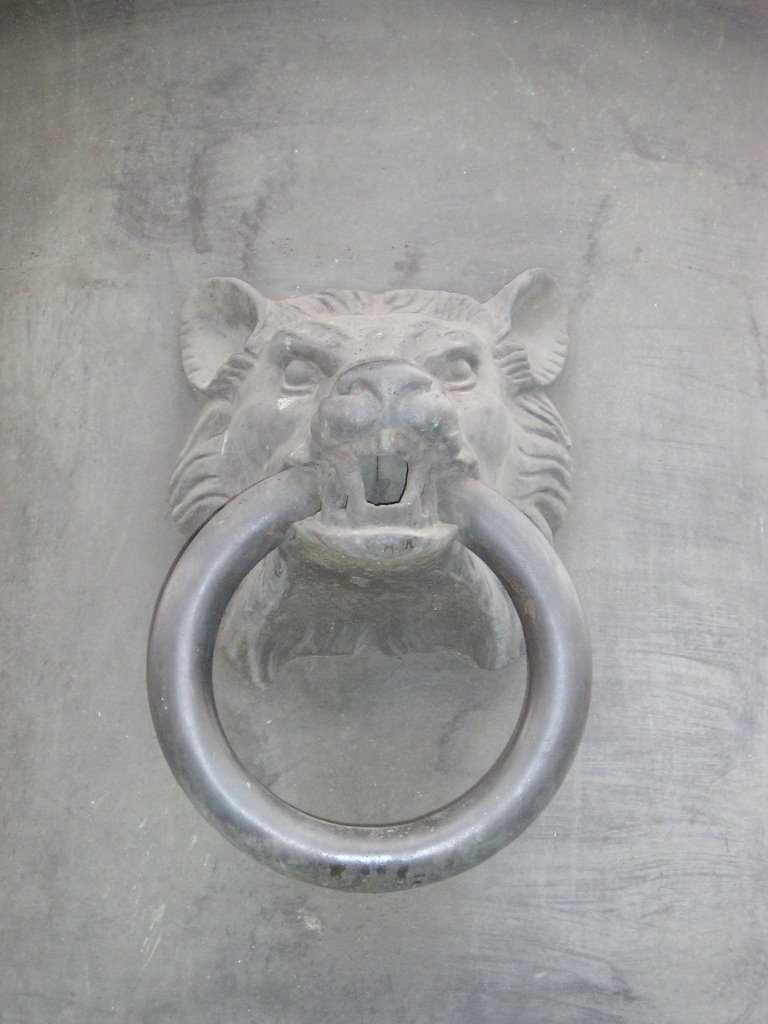
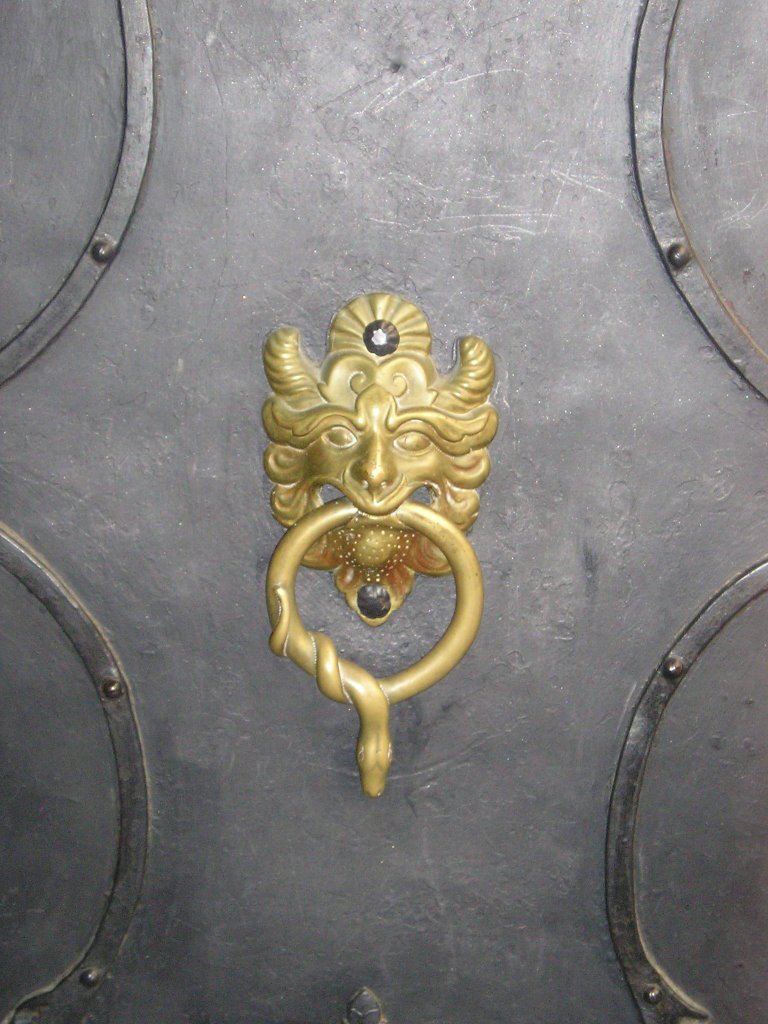
Door knockers - Lion with a ring

What is this European fascination with the head of a lion with a ring through its teeth? I was in Rome (Italy), Salzburg (Austria) and Venice (Italy) recently. Out of my hundreds of photos thought I'd share these ones first.


Rome, Italy - don't remember where exactly. But look carefully - there are many like these.

Venice, Italy. Randomly walking through the narrow streets. An ornate well kept door. And there it was again.

I visited Salzburg, Austria. Birthplace of the great Wolfgang Amadeus Mozart and sight of the classic movie "The Sound of Music". In this one the ring is actually a curled up snake. Fascinating eh? (The Canadian in me says...)

Saturday, May 20, 2006

The Ballad of Natural Beauty

by the The Connoisseur of Nature and the Universe

The sky is a plate and in that plate the sun and moon become the lamps, the collection of stars in the universe shine like the pearls

The fresh sandalwood infused aromatic air of the mountain (malya) is like the incense, and in praise of the jot-rup Vahiguru, all vegetation is like the flower offerings

How can your arti be done – O how wondrous is the arti which is happening now. O your arti is being done Emancipator of birth and death (fear)
The unstruck sabad is the resounding drum (being played in your glory) – Pause

Your eyes are thousands, yet none are your eyes
Your face are thousands yet no one (particular one) is yours
Thousand pure feet are yours, yet not even one foot
Without a nose, yet thousands are your noses
This is the way the drama of yours attracts me

In every heart there is light and that light is you
By the light that is Vahiguru, every soul is illumined
It is through the Guru’s teachings that this light of Vahiguru is manifest

What is pleasing to you Vahiguru, that is the best arti.
O Vahiguru, my mind yearns for your Lotus feet
As the honey bee yearns for the nectar of flowers
I thirst for you O Vahiguru, day and night

Nanak, the sarang – sparrow hawk – asks for the drop of water straight from you Vahiguru
So that he may be at peace by internalizing your presence


(To be sung in Raga Dhanasri. From the mouth of Nanak I)

Sunday, May 07, 2006

Spirit of the Sikh - Meditations on Religion and the Spiritual Experience

Yes, this is Prof. Puran Singh's 3 volume meditational expression reflected onto paper of his experience with Sikhi - written between 1927 and 1930. The forward to Part I eloquently describes:
Spirit of the Sikh, as its title would indicate, is the author's expression of devotional passion arising out of the teachings of the holy Gurus, the religious history of Sikhism and his understanding of the ideals underlying the practice of Sikh faith.....

As the theme of Spirit of the Sikh is the expression of fervent devotion to the holy Gurus in lyrical outbursts in prose charged with deep emotion, it time and again becomes fragments of prose poems.....
I just read Otpreka Singh's blog in which he shared a modern westerner's view of saint-warrior. Then I remembered a piece from Spirit of the Sikh. I had glanced at this poem/prose-poem of Prof. Puran Singh a while ago. Something in it had stuck with me. Maybe it was:
"I am born of the flash of the Sword. And my speech is thunder; I do not compromise with darkness, I tear its belly with my rapiers of lightning;"
Or then again, maybe it was:
Put a sword in the belt of the Sikh youth,
And give him the draught stirred with the Guru's dagger,
And let his soul shine as sharp as the edge of lightning.
And he should stand up alone in the universe to match the
strength of his arms with the arms of the Sun.
But anyway, I thought I should type out the poem in its entirety. His words are fascinating. In almost all his writing he includes bani, tavarikh, and rahat (scripture, history and discipline). And as some of you know I always insist that in order to understand gurmat it is imperitive to do a multi-dimensional analysis of the subject from these three angles (bani, tavarikh, and rahat).

Enjoy and Carhdi Kala!

---------------
The Song of the Akali
By The Swordsman that goes before the Sun

I am God's Temple,
Brother of the Way! Let me kiss
Your feet, let me rub on
my forehead the dust
of your path.

Over us is God, Brother! Over us is He:
Are you thirsty?
I shall run to the well, throw the bucket in, slipping a long hemp line with
speed and draw it up full of water for you;
I shall bring you the draught, sweet and cool to refresh your soul by my
humble love-perfumed service;
You shall drink and rest and lie quiet under the shade of a road-side tree;
I shall massage your tired limbs, and kiss you in my soul as you sleep by the roadside!
Over us is God, Brother! Over us is He.

* * * * *

Are you hungry?
I have a handmil, to grind for you wheat, I will knead the flour,
and bake it into bread for you.
There is plenty, Brother, there is plenty.
Are you naked?
My mother and sister and wife have gathered the cotton of Punjab,
they ginned it and spun it and wove this yarn of love into cloth for you.
Wear them and be glad.
They were made for you!
There is Guru's Plenty, Brother, Plenty!

* * * * *

The fingers of the Sikh man and woman work --
Work work, work ceaselessly.
We create wealth, it is the product of our labour in the love of the Guru's commonwealth.
And know, all is added unto us.
There is Guru's Plenty, Brother, Plenty!

* * * * *

I am of the Country of Man,
I was born in the Heart of Man,
This is my native land!
Come Brother of the way, come;
I am on way to Hari Mandir.
I see you are the Temple yourself.
O Disciple of the Guru!
What golden domes resound in you!
I hear the song of eternal comradeship in you.
Who are you? I feel you are a brother to me, born of the same
mother, that have met me after an age-long separation!

* * * * *

Come, Brother, come.
Do not be fettered here with mere dreams;
there yonder is the Hari Mandir, around which the blue lakes of nectar wave
day and night;
There is the song of the Guru! whose echoes are in me.
Come, Brother! come.
I am on way to the Golden Temple.

* * * * *

"I see the nectarean lakes in your eyes,
You are the music of fellowship."
I see the light of God on your face.
Slacken your pace,
Let me behold you,
Be with me for a while, O strangest of strange Men!
Good-bye. Remember me when you get weary of collecting
poppies and staining your hands with their blood.
Remember me! I am of the City of Joy.
My name is -- "Blessed be Guru Gobind Singh".
All other names are illusions, conventions, self-deceptions.
Remember this one Hymn--the Name has in it the secret of life.
This is a star burning day and night in my eyes.
Look at the star,
Follow the gleam.
And passion, O brother of the Way.
Life is a glorious passing away.
I am born of the flash of the Sword.
And my speech is thunder;
I do not compromise with darkness, I tear its belly with my rapiers of lightning;
Terrible is the sight of the dazzling tangle of the flashes of my
rapless, striking right and left and destroying.
You are not born of steel?
No!!
The sheen of steel is of the colour of the soul.
And lighting of the Sword-flash is of the gleam Unknown.

* * * * *

Only little birds quiver, their eyes are dazzled and they hide in
their nests when the sword-like moves on the face of the
restless blades of lightning;
But I tell you the smiting scimitar has in it the white sparkle of
the bow of God.
Put a sword in the belt of the Sikh youth,
And give him the draught stirred with the Guru's dagger,
And let his soul shine as sharp as the edge of lightning.
And he should stand up alone in the universe to match the
strength of his arms with the arms of the Sun.

* * * * *

We fell as a rain of Kirpan-flashes on the ghosts of darkness;
Do you remember when the invaders from the North came and
laid chains on the tender wrists of hundreds of Hindu
Punjabi wives and daughters and marched them as
bondwomen bound for Kabul?
When on the banks of the Chenab the miscreants met the Sword-
Tempest of the Khalsa, and the seperated birdmates were
rescued from the claws of the birds of prey, and they met
again, those from whom they had been cruelly separated!

* * * * *

This life is a theatre of war,
And I am strangely excited when singing war-songs,
And when I die, there too I fight my way through a host of black
ghosts yonder to the shining ones;
As long as a single man has the way of the ferocious tiger and
the wolf in him still unforgot, I cannot lay down my Kirpan,
nor unstring my bow.
God is a little child and I have to fight saving Him from all
harm that comes from these tigers (who) prowl on the earth in
the guise of men.
I do not sleep and dream when I am on the battlements,
And when I die, I die to save my God who is a little child.

* * * * *

Sunday, April 23, 2006

People of the Spirit, WiFi and Belgrade

I spoke at a conference in Belgrade recently on behalf of my employer (April 10, 11) -- (http://seebb2006.tninternational.com/).

I can say for sure I met some "people of the spirit" in Belgrade, Serbia and Montenegro. It started with my co-workers. As you all may know the strife and suffering caused by nationalistic corrupt leaders led to a brutal civil war and eventual break up of the former Yugoslavia (including NATO intervention). There was a time when the price of a cup of coffee would double in one day because of super inflation. The overall life systems were a mess. But now, the hard working younger educated generation have dreams and want to make things work. There is a silent technological and entrepreneurial revolutionary fervour among the masses. Well, this conference was organized by a friend of a collegue of mine who had emigrated during the recent war to North America (one to Canada and another to the US). Now that the political and economic climate is right, they are back and working on rebuilding their nation. I was just a small part of the speaking agenda and was simply promoting WLAN systems for enterprises and service providers.

The "people of the spirit" I met were essentially people on the street that said hi, were concerned and worried whether I was enjoying my time in Belgrade and just exhubed "hope". I was quite humbled. I had a memorable encounter with the shuttle driver from the hotel to the airport. He was 22 years old, just started working at the Hyatt as a shuttle driver and shared with me his aspirations to study Hospitality sciences and rise up the ranks in the hotel industry in Serbia. We talked about food, geography and dreams.

The Danube is the main river that cuts through Belgrade. Because of its location and the presence of the river, Belgrade (and Serbian region) has been subjected to wars, invasions and internal strife for centuries. My encounter with the people and very very brief encounter with their history (as told by the people) reminded me of the land where our Gurus laid their holy feet. Because of the strategic location of Panjab and its centuries of invasion, war and strife, the people of that area naturally transformed into "people of the spirit". And a common attribute among people who have been through such strife is "HOPE". The only difference between the Khalsa which was developed in Panjab and today is spread around the world, and the people of Belgrade is our "hope" is manifest and fulfilled within the context of the Grace of the Guru. I wonder what sustains their hope.

Anyway, I travel a lot for business. This was one of the first times that my business travel was transformed into a a spiritual reflection. I don't do that as often as I should. So - Thank you Belgrade!

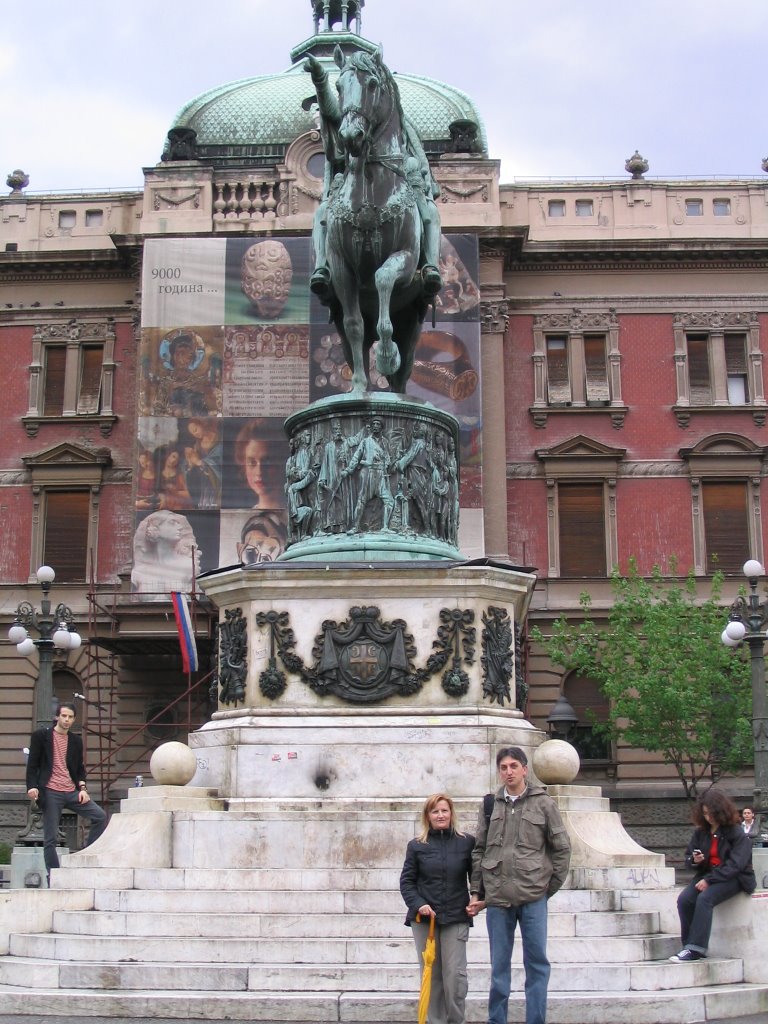
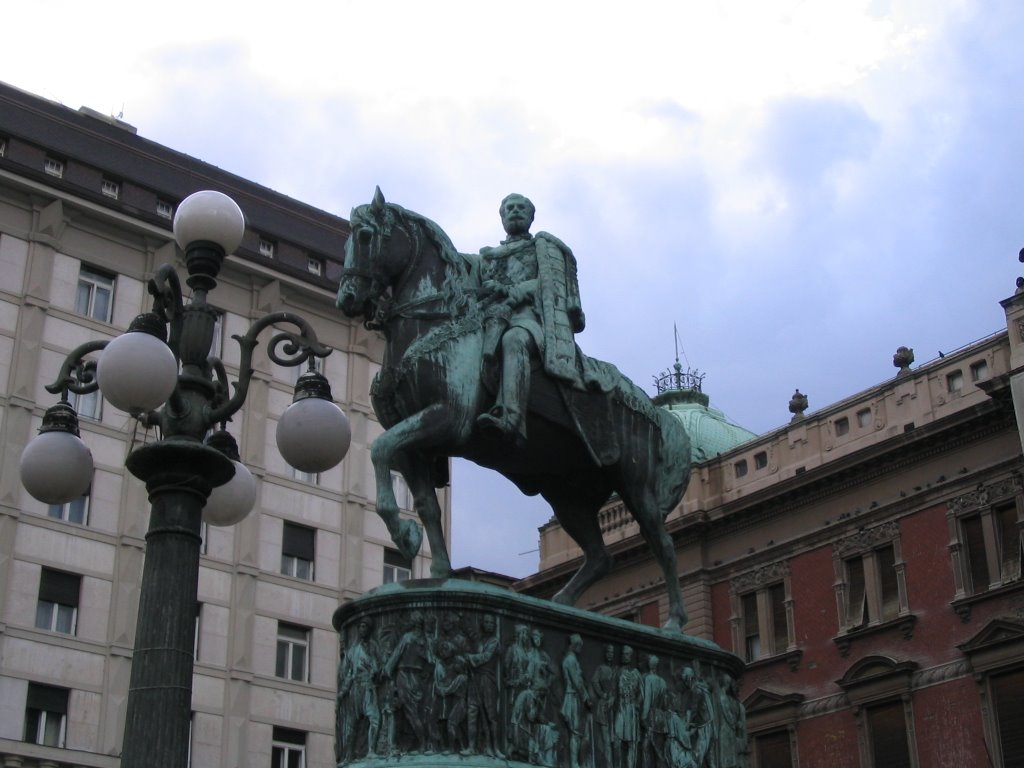
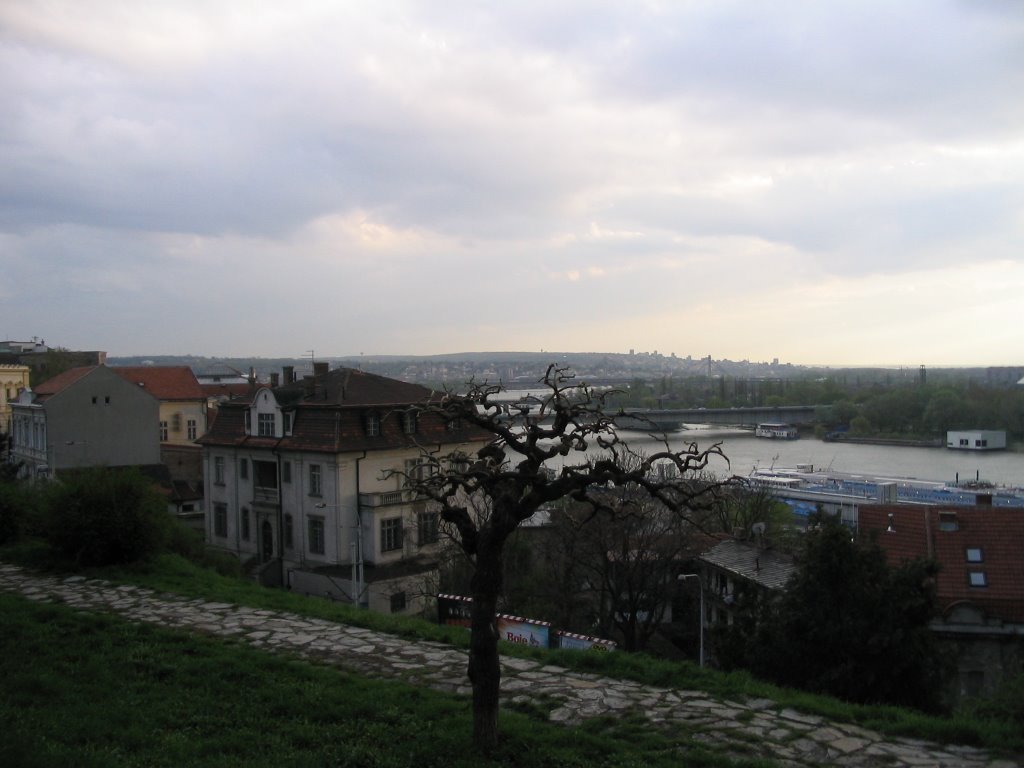
Here are a few of pictures of Belgrade.

My collegue and his wife.
Famous war hero who fought for the independece of Serbia from the Ottoman Empire.
We went for a stroll in a park on the banks of the Danube. The park is built within an ancient fort.
View of the Danube.

another test...

123 123

Test entry - check comments

I was informed that I don't have comments enabled. You know, I could lecture people for hours on how the internet works, the algorithms for encryption and compression in the virtual private networks of enterprise and carriers, 802.11 and WiMax, and can give hints to extract milliseconds out of hash tables in routing code in embedded networking devices, and I can even analyze the bandwidth requirements of IT departments in SME and large Enterprises from these devices. But for the life of me I never got into Web programming. I can't really equate blogging with web programming...it is far from it, but sometimes the simple things are complicated for me. I shudder to touch a line of code even in the generic template, but I'm getting it slowly.

Anyway, this is a test post to see if comments have been re-enabled. Thanks Angad Singh.

Saturday, April 22, 2006

Is Sikhi a missionary faith?

Is it? This is what Prof. Puran Singh said about it a few decades ago:
The Gospel of Guru Nanak has yet to be taken out of its ecclesiastical and theological atmosphere, to be used as a text-book of the Science and Art of life and worked into the daily life of the whole world. The human spirit it invokes is universal. The English, the Americans, black and white, all must receive it in full measure. Guru Nanak and Guru Gobind Singh are theirs, the Sikhs may adore them as they choose, but they are truly the Prophets of the Future. Men gathering on the banks of the Ganges, the Mississipi, the Thames, and the Seine, will be reborn in the spirit of the Guru, with no past history to recount, but with the new and future Glory of the Nam inspiring them. (Taken from essay - the Sikh Nation, Prof. Puran Singh).

Also, here is what Principal Teja Singh said about it atleast 50 years ago (maybe more). He first describes Guru Nanak as a missionary par excellence:

Guru Nanak was a missionary in the truest sense of the word. His whole life was a message. He traveled over a greater part of land than any prophet has ever done in the world. And when we consider the difficulties of moving about, the hard times, and the diversity of political, social and religious regions through which he had to pass during his travels. We cannot but marvel at the energy and patience with which he adapted himself to the ever-changing forces of his time.

Then, talking about the prevelant times (mid 1900's) he says that the "so called educated Sikhs", need to realize that it is their duty to propagate their faith (first among the community, then beyond):

Even among the educated there is a small class of men, whose hearts burn for the advancement of Sikhism, but being hard workers in their professions and finding with difficulty sufficient time to learn about the complicated problem. They can but turn to those for assistance who are set apart and maintained as their theological trustees, the Granthis and preachers. In the general scramble for the Government Service, it goes hard with them to think of self-sacrifice and to make a bold jump for the Guru themselves.

Now it is clear that the chief work of missionaries lies with the Granthis and preachers, and for years to come it will have to be done through them alone. Until the educated people also realize that their indifference is fatal to the progress of Sikhism and that the later they come into the field, the harder the task will be against the contending forces
I would advise those wanting to understand the missionary (ambassadorship) aspect of Sikhi to read Principal Teja Singh's article titled "Guru Nanak and his Mission" available here.

Thursday, April 20, 2006

Greatest Sikh of the 20th century

First, I am adding http://thepanthicotpreka.blogspot.com/ to my list of frequently visited blogs. Good job. (I don't have a published list...gotta work on my template I guess ;-) )

Second, I have the urge to provide information about "The Greatest Sikh of the 20th century" according to a referendum and nomination process that swept the Panjab villages 5 or 6 years ago. I am urged to do this based on a posting of a dynamic Sikh blogger-sangat member - Prabhu Singh - who was nominated Sikh Youth of the Month on www.sikhsangat.org.

In order to understand the great Baba Jarnail Singh who hailed from the village of Bhindran, it is important to read (or listen to) his speaches. Fortunately, we don't have any excuse any more that we cannot understand Panjabi because almost ALL his talks were recorded in a book. Please hunt down, purchase and read - Struggle for Justice: Speeches and Conversations of Sant Jarnail Singh Khalsa Bhindranwale, by Ranbir Singh Sandhu, Sikh Educational and Religious Foundation, P.O. Box 1553, Dublin, Ohio. 1999, ISBN 0-9672874-1-3

In the preface to the book, Ranbir Singh quotes Khushwant Singh (who we all know is a psuedo-moderate Sikh academic, more of a proficient fiction writer who according to Vahguru's Magnificent Drama took birth in a Sikh family, who clearly stated in his early life that he is agnostic and only has association with the Sikh community, not the Sikh faith...anyway, I digress.). This is what Khushwant says

'On a later visit to Amritsar I got an inkling into the reasons of Bhindranwale's popularity. I will narrate two incidents to illustrate this. One day a young girl came to see Bhindranwale. ..... She clutched his feet and sobbed out her story of how she was maltreated by her husband's family for failing to extract more money from her parents and of her husband's unwillingness to take her side. Bhindranwale asked her name and where she lived. "So you are a daughter of the Hindus," he said. "Are you willing to become the daughter of a Sikh?" She nodded. Bhindranwale sent a couple of his armed guards to fetch the girl's family. An hour later a very frightened trio consisting of the girl's husband and his parents were brought to his presence. "Is this girl a daughter of your household?", he demanded. They admitted she was. "She tells me that you want money from her father. I am her father." He placed a tray full of currency notes before them and told them: "take whatever you want". The three fell at his feet and craved forgiveness.'
Every time I read that...I choke-up...I pray for an ounce of conviction like that.

Also see, for a good background of the post-colonial Sikh history and a brief history of Babaji - http://www.sikhcoalition.org/SantJarnailSingh.pdf

Also see one of my previous posts "I knew not then". The mention of Baba Jarnail Singh there is a result of my personal encounter at a Sikh youth retreat with an eye-witness of the battle of Sikh vs. Indian Army, June 1984 (I don't like calling it by the Indian hegemonistic name of Operation Bluestar).

There are tons and tons of information about Babaji, some very confusing that may potentially cause for distraught. But over the years that I have been a cognizant Sikh and becoming aware of our scripture, history and discpline, I am convinced that he was indeed the greatest Sikh of the 20th century. And for the popular media that didn't take heed to the nomination process and referendum in Panjab...he was nominated by an overwhelming majority.

I end with the the famous motto of Baba Jarnail Singh which is so apt even today
"Nasha chado, Singh sajo, Ammrit chako."

Saturday, April 15, 2006

Friday, April 14, 2006

The Guru Khalsa

1 Vaisakh, 538 Nanakshahi

Principal Teja Singh describes what the value of an intense relationship between Guru and Sikh results:
A Sikh, a pure-hearted Sikh, who follows the teachings of his Guru is a great power in himself; but when such a Sikh gets into himself the dynamic personality of such a perfect exemplar as Guru Gobind Singh, his powers acquire an infinite reach and he becomes a super-man. He is called Khalsa, the personification of the Guru himself. “The Khalsa” says the Guru, “is my other self’ in him I live and have my being.” A single Sikh, a mere believer, is only one; but the equation changes when he takes Guru Gobind Singh into his embrace. He becomes equal to ‘one lakh and a quarter,’ in the Sikh parlance. This change occurs not only in his physical fitness, but also in his mental and spiritual outlook. His nature is so reinforced in every way that although hundreds may fall round him, he will resist to the last and never give way. Wherever he stands, he will stand as ‘a garrison of the Lord of Hosts,’ a host in himself - a host of one lakh and a quarter. He will keep the Guru’s flag always flying. Whenever tempted, he will ask himself, “Can I lower the flag of Guru Gobind Singh? Can I desert it? I, as Budh Singh or Kahan Singh, can fall; but can Guru Gobind Singh in me fall? No, never.” - Outline of Sikh Doctrines, Principal Teja Singh

On this day, let us make the pledge that we will not let our internal and external image of the Guru fall. Let us realize the importance of Vaisakhi day of 1699 CE. It was the inauguration of the Khalsa. Some (even our revered writers) call it the "Creation" of the Khalsa. An inauguration is the opening of something that took preparation and time. It took a total of 200 years (1499 to 1699) for the development of the community to reach a level that the Sovereignty of Divine Wisdom could be bestowed upon them. And that is exactly what was manifest by Nanak X - the Plume Adorned True Sovereign, the Rider of the Blue Steed, the Holder of the Royal White Hawk - kalgidhar sace patshah, nila ghora vale, citian bajan vale.

As Harinder Singh mentioned - on this day Sikhs remember the Divine awesomeness - vismad - because the Khalsa is the embodiment of the Divine:

Amrit, (sometimes incorrectly mentioned as Sikh baptism) made, the basis of this holy organization. There was no room left for any wavering on the border-line. All who wanted to serve humanity through Sikhism must join it seriously as regular members, and receive its Amrit as the initial step. All must have the same creed, which should be well-defined and should not be confused with the belief and practices of the neighboring religions. - Principal Teja Singh
Congratulations and celebrate the Divine in the unique Sikh way.

jagat jot japai nis basur...
One who keeps alight the unquenchable torch of truth, and never swerves from the thought of one Vahiguru;
One who has full love and confidence in Vahiguru, and does no put faith, even by mistake, in fasting or the graves of Muslim saints, Hindu crematoriums, of Jogis’, places of sepulcher;
One who only recognizes the one Divine and no pilgrimages, non-destruction of life, penances, or austerities;
And in whose heart the light of the Perfect Once shines,-- that one is to be recognized as a pure member of the Khalsa.

Carhdi kala!

Thursday, April 13, 2006

The result of Vaisakhi day

Following is a note from a good friend of mine from the Sikh Research Institute. The result of Vaisakhi day according to Prof. Puran Singh is that the Khalsa's inner springs of action were changed and put into motion for the betterment of humanity by the "Plume Adorned Sovereign - Guru Gobind Singh".

-------------------------------------------------------
“In this infinite abundance of service in the Name of the Beloved, lies the secret of equality of men and women and their complete social emancipation from the thralldom both of the false religions and false systems of social thought … The alterations of the outer conditions of life, even political revolutions cannot secure the equal distribution of land and wealth and labor; they cannot transmute human nature. Unless the change be wrought within, the volcanoes will burst forth again, and the lava shall flow as before, and all our leveling of conditions will be in vain! The Guru visualized this and leaving the outer surfaces of human nature untouched, changed the inner springs of action.”

- Prof. Puran Singh, “The Khalsa of Guru Gobind Singh,” Spirit of the Sikh

On Vaisakhi day of Nanakshahi 231, ‘The Rider of the Blue Steed’ inaugurated a highly dynamic personality – the Khalsa – a community whose ‘Light of Life’ ceaselessly radiates glory, justice, and love.

Vaisakhi is a reminder to all of us to reflect on the Guru’s vision of personal and community development, revive the spirit of Carhdi Kala that changed the destiny of South Asia and beyond, and respond to the critical issues and challenges, both internal and external.

Vaisakhi is a time to reconnect with the roots. For the ‘tillers of the soil’ of Panjab, it is the celebration of the harvesting festival. For the Guru Khalsa Panth, it is the bestowing of sovereignty by the Tenth Nanak. The Sikhs worldwide salute the Awesomeness, vismad, in religio-cultural celebrations.

May you feel inspired, creative, and liberated!
Harinder Singh

************
Sikh Research Institute
Preserve. Celebrate. Inspire.
info@sikhri.org | www.sikhri.org
---------------------------------

Saturday, April 08, 2006

Prof. Puran Singh manuscripts missing...

Source: Tribune Chandigarh. April 4th.

Rare manuscripts of Prof Puran Singh missing
Sarbjit Dhaliwal
Tribune News Service

Chandigarh, April 4
Certain important archives related to the late Prof Puran Singh, respected Punjabi poet and prose writer, seem to have disappeared from the library of Punjabi University, Patiala. When did this happen, no one knows.

The way Prof Puran Singh described the Punjabi identity, temperament, image and mood in his poetry, no one has been able to match till now, say critics. He was a multifaceted personality.

“We are trying to locate the manuscripts of certain important works of Prof Puran Singh,” said the Chief Librarian of the university when contacted by The Tribune on the phone this morning. “I have put the officials concerned on the job of tracing the manuscripts,” she added. “It will take some more time for me to say something definite on this issue”, she said.

Sources said that the manuscript of a novel, “Bhagirath,” extracts of which were published long ago in a Punjabi University journal, “Puran Singh Studies,” is also missing. Another important missing manuscript is that of “Spirit of the Sikh”. The publication wing of the university had published it some years ago. It was edited by the late Prof Gurbachan Singh Talib, eminent scholar.

However, there were a number of printing mistakes in the publication. Another professor at the university, who felt the work required to be re-edited and republished after removing the mistakes, tried his best to find the manuscript. However, he was unable to locate it. " The Spirit of the Sikh" was perhaps published from a typed manuscript. That is what had been stated by Professor Talib in the book, said the Chief Librarian.

The family of Prof Puran Singh had donated the library of the writer to the university in 1966. " The archives of the writer were handed over to Prof Kirpal Singh Narang of the university by Raminder Singh, one of the sons of Prof Puran Singh", said a UK-based Punjabi writer, Amarjit Chandan. There was photographic evidence to prove this, he added.

Born in the North-West Frontier Province, now in Pakistan, on February 17, 1881, Prof Puran Singh did his higher studies in applied chemistry from Japan where he also published a magazine, " Thundering Dawn," dedicated to the freedom struggle of the country.

He was a close associate of Lala Hardyal and also lived in Patiala for some time. Prof Puran Singh was sent to jail because of his active participation in the freedom struggle. He died on March 31, 1931, at Dehra Dun, where he had earlier served in the Forest Research Institute. Unfortunately, no one has tried to organise a function to remember the legendary personality even this year, the 125 year of his birth and 75th of his death anniversary.

Prof Pritam Singh, a well-known collector of manuscripts, says that he wanted to donate his huge collection of rare documents to Punjabi University." But I changed my mind when it took six months for me to locate certain matter related to 'Ahiyapurwali pothi' from the library of the university", he said.

However, the Chief Librarian said that she had tried her best to preserve the rare archives and manuscripts in a scientific manner. As many as 48 eminent persons, including men of letters, had donated their libraries to the university in the past four decades." It is a difficult task to handle such a huge collection of works," she said.

I'm back - First life. Then, its expression

Sorry for not writing for so long. Been gone quite a while primarily because I didn't have DSL connection in my new apartment in Munich, Germany! Yes. I am here in Munich for 6 months on a company assignment. Been travelling a lot. In the past 2 months I have been to Hannover, Augsburg, Rosenheim (Germany). Helisinki, Finland. Rome, Italy and of course Boston, MA.

And I am off to Belgrade, fmr. Yugoslavia tomorrow for a conference which I am speaking at.

Will post pictures soon. I have been slacking on reading as well, but now that spring is here I promise to catch up.

Spirit Born People quote:
The Gurus have altered our ideals of inner self-realization. "Know Thyself", is only partially right. The true artistic consciousness or religious consciousness blossoms in its own inner beauty when the inner self of man and the outer self of nature unite. Both partake of Reality which is but a cosmic phenomenon of life. Those who sat in caves, and meditated and found God in their soul, the so-called Yogic idealist, the Zens of Japan, were not truly spiritual; they were still intellectual, the abstractionists, poor moralists who set themselves, in pride of intellectual abstraction, as gods. On the other hand, those who rejected the subjective realities and saught Truth only in the outer objects and their beauty as realized by the senses, the so called Realists, also were intellectual. Their art too, wholly intellectual, touches in its ratre flights the spiritual. There is thus no difference between the Greek ideals of old and the Art-ideals of the East which are based on metaphysics....

Hence it is that the Gurus do not consider artistic expression which needs must be intellectual. They insist first on artistic life and most on artistic inside, on the flame of inspiration burining within at the centre. The rest must follow. According to the Gurus, the spiritual expression of personality can only come thourgh feeling born and bred in the human flesh. Human flesh is the imperfect medium though which the Gurus wish to express the perfect. Beauty is neither outside, within the reach of the realist, nor inside, within the reach of the idealist, as both are seeking an intellectual abstraction. It (Beauty) is beyond intellectal abstractions, in hte actual subjective spiritual union of the spirit of man with that of the universe or Nature.
This was an excerpt from "Notes on Art and Personality from the Sikh Viewpoint". This essay of Prof. Puran Singh gives us a glimpse into the inspiration of art and culture within the Sikh context. The essay starts with the famous line: "First, life. Then, its expression". Its a fascinating line. Now its time to delve in the Guru Granth and realize its import.

Saturday, February 25, 2006

Concreting History in the name of progress

I can't get over this. For those that don't know me, I am very fond of food, technology, travel, Gurmat Sangit, Sikh History and of course, Sikh Arts and Culture. It makes me so frustrated and sad that in the name of progress original historical art and architecture are being destroyed for new, shiny, big, vah vah effect slabs of useless marble and stone.

Gurmeet Rai (archielogical preservation expert and wife of Raghu Rai - famous photographer) wrote this scathing rebuke to the SGPC leadership and administration. Please see - http://www.sikhsangat.org/publish/article_849.shtml

It is amazing that her keen discerning intellect is aware of the power and imagery of Gurbani in relation to nature and environmentalism. Members of the SGPC, I am sure can quote loads and loads of Gurbani more than Gurmeet. However, they fundamentally lack the intellect to apply in their daily lives or in the running of our Gurduaras and organizations. What use is Gurbani if it is not applied? Application to our lives is what makes it a living philosphy. Otherwise it will become one of the thousands of scriptures of ancient wisdom that only shows up in academic and historical studies. Gurbani interpreted into active life is like the budding trees in spring. Mere recitation and rote memory with no application makes the reciter into dry wood.

ਸੂਕੇ ਹਰੇ ਕੀਏ ਖਿਨ ਮਾਹੇ ॥
ਅੰਮ੍ਰਿਤ ਦ੍ਰਿਸਟਿ ਸੰਚਿ ਜੀਵਾਏ ॥1॥
ਗਉੜੀ ਮਹਲਾ 5

The glance of infinite wisdom (ammrit) puts life in the lifeless.
It makes dry wood, green in an instant
Nanak V, Raga Gauri

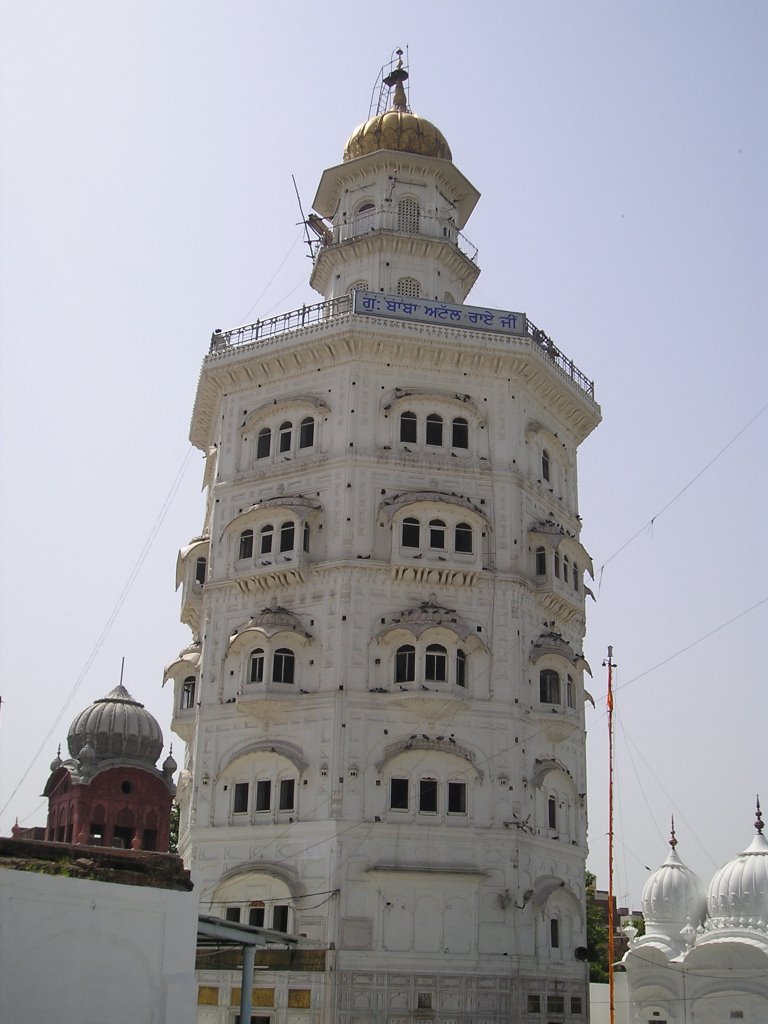
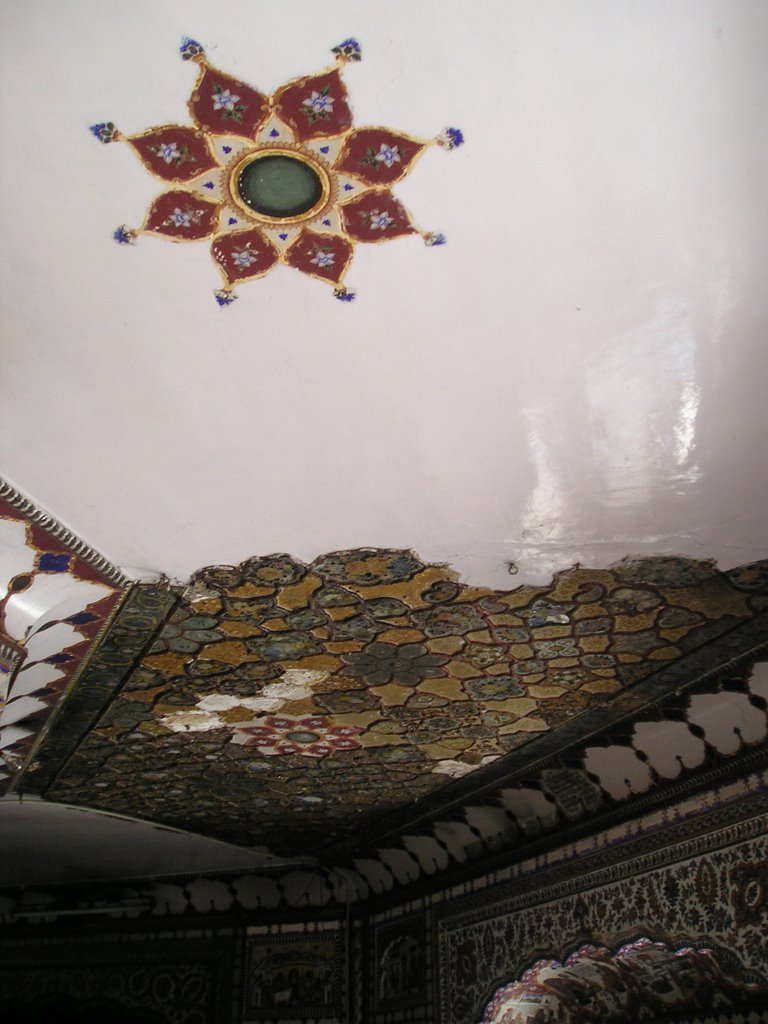
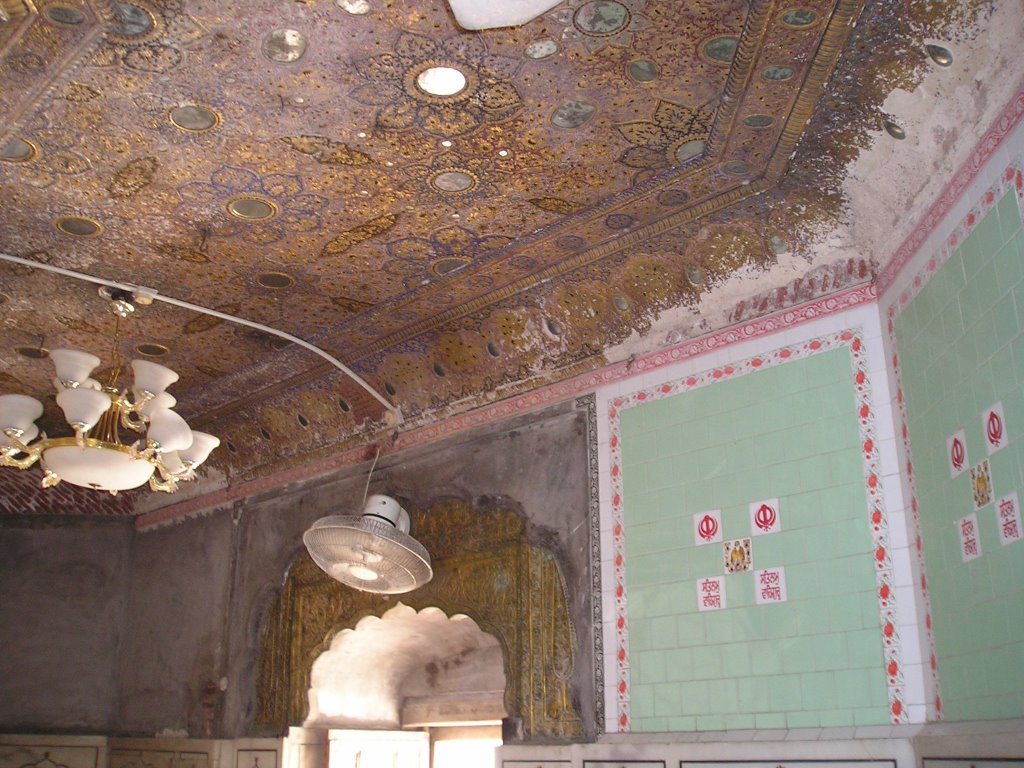
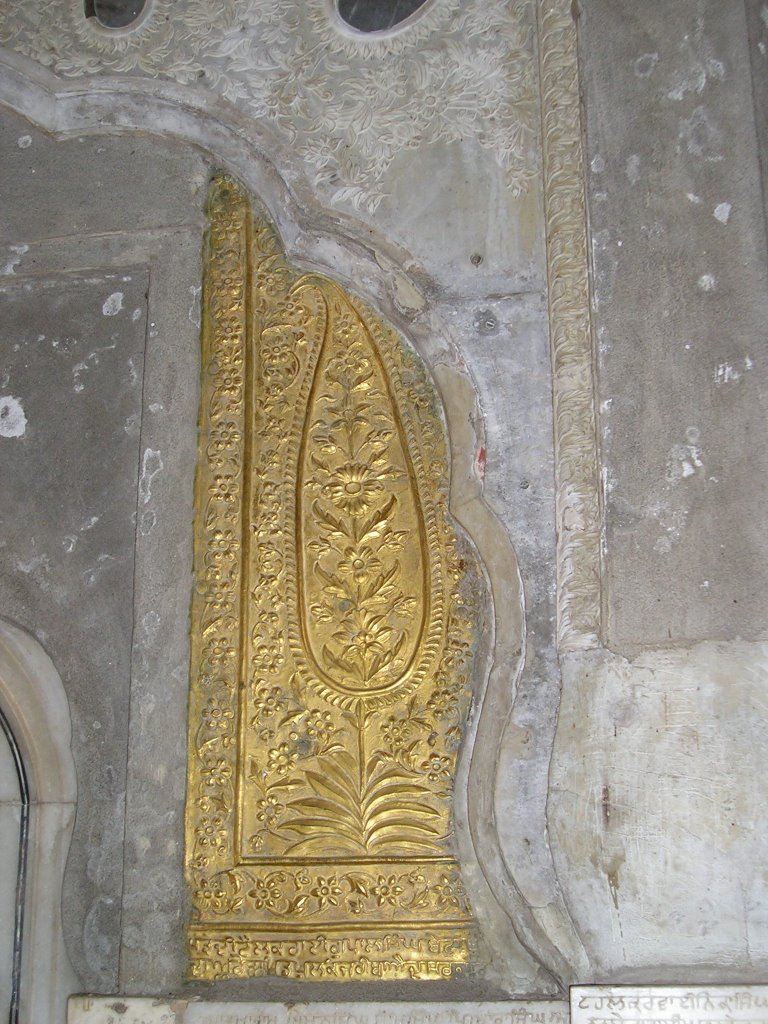
On a visit to Darbar Sahib, Amritsar, in 2004 I visited Gurduara Baba Atal which is within the complex just beside the rest houses. I had heard of the destruction of art and architecture in the building. Here are some pictures. Lime green bathroom tiles, whitewash...its quite ugly. I had heard that some protestations had stopped the destruction and so you can see the state. I don't know what it looks like now.

Picture 0 - Gurduara Baba Atalrai ji


Picture 1 - this is what the intricate work on the walls looks like.


Picture 2 - whitewashing of the ceiling

Picture 3 - neon-green (lime-green) bathroom tiles!!

Picture 4 - The brass/golden part is left. Arghh...the panjabi infatuation with Gold!!

Wednesday, February 15, 2006

An Ode Part 3 - Fascinating story of virtues...

The final pauri of Basant ki Var is a story of fascinating realization. The rain falls, the buds start showing, its beautiful, something's there. But then, boom! The flowers bloom, the grass suddenly turns green, leaves everywhere, sunlight and pleasant weather, it fascinating. The conclusion of Basant ki var presents this fascinating progression. It begins with a series of questions that have been tickling the minds of human kind since time immemorial. What are the origins of the universe and does there exist an Almighty Power that runs the universe? The answers can be realized, the Guru says, only through the experience of simran. We Sikhs mistakenly equate simran with the chanting of words (in our case: Vahguru), either in solitary or in the congregation with accompanied music. The Guru, on the other hand, clarifies that simran is the larger package of action that encompasses three different facets:

1. vocalizing (ਕਹਨਿ) – through actions and deeds and by bringing the Guru’s revelations (bani) to life - real life by living the teachings. The essence of this action is provided in the form of Guru Nanak’s revolutionary Three Golden Rules – nam japo, kirt karo, vand chako.

2. internalizing (ਧਿਆਇਨਿ)– by really understanding bani and realizing that our lives are to be lived as Guru inspired individuals

3. listening (ਸੁਣਨਿ)– in the form of reading, listening and singing the virtues of Vahguru as bestowed to us in the form of the Guru’s revelations – gurbani.

Those that do all three of the above, they are considered bhagats - true practioners of life. Not only are they bhagats, they are beautiful bhagats (ਸੇ ਭਗਤ ਸੁਹਾਵੈ)

BTW, Notice how all of the three golden rules is in turn referring to the original subject of simran – nam japna and simran are pretty much the same thing on a higher level.

I will explain this in a later post with multi-dimensional analysis using a triangle for visual cognition. Something I learnt at the Air War College National Security Forum last year. See the pics in previous posting.

Anyway, back to Basant ki var - final pauri - with a transcreation attempt.

ਕਿਥਹੁ ਉਪਜੈ ਕਹ ਰਹੈ ਕਹ ਮਾਹਿ ਸਮਾਵੈ ॥
ਜੀਅ ਜੰਤ ਸਭਿ ਖਸਮ ਕੇ ਕਉਣੁ ਕੀਮਤਿ ਪਾਵੈ ॥
ਕਹਨਿ ਧਿਆਇਨਿ ਸੁਣਨਿ ਨਿਤ ਸੇ ਭਗਤ ਸੁਹਾਵੈ ॥
ਅਗਮੁ ਅਗੋਚਰੁ ਸਾਹਿਬੋ ਦੂਸਰੁ ਲਵੈ ਨ ਲਾਵੈ ॥
ਸਚੁ ਪੂਰੈ ਗੁਰਿ ਉਪਦੇਸਿਆ ਨਾਨਕੁ ਸੁਣਾਵੈ ॥3॥1॥

From whence did the One arrive, where does the One reside and into what does the One merge? Can any individual estimate the vastness of Vahguru? We all know that all of creation is the manifestation of the One. Everyday there are some that listen, internalize and vocalize the virtues of the One. As a result, these blessed individuals are beautified with true life. The Ultimate One is unfathomable and unapproachable through regular senses, no one is capable of equating themselves with the One. Nanak wants to share the fascinating story of the One: The True Guru is capable of making the self realize the One inside!
3rd Pauri, Ode in Basant, Nanak V

Tuesday, February 14, 2006

An Ode Part 2 - Fresh and transformed anew...

The second pauri of Basant Ki Var provides imagery of a gruesome battle scene which is transformed into a victory just like the dryness of winter transforms into a spring like freshness. The battle is between the self (oneness of Vahguru) and ego (the foundation of the five vices). The sickness and suffering are not merely physical. Where there is frustration, where there is lack of confidence, where there is doubt, where there is distraction, there is sickness of the soul. A Sikh of the Guru is devoid of frustration, doubt and distraction and the Sikh of the Guru is the showcase of confidence. When ego engulfs a Sikh’s life – it is death. When, with the assistance of the Guru, a Sikh realizes the Vahguru within – it is life. Touched by the Guru, inspired to act per hukam via seva simran, death never comes again for a Sikh.

ਪੰਜੇ ਬਧੇ ਮਹਾਬਲੀ ਕਰਿ ਸਚਾ ਢੋਆ ॥
ਆਪਣੇ ਚਰਣ ਜਪਾਇਅਨੁ ਵਿਚਿ ਦਯੁ ਖੜੋਆ ॥
ਰੋਗ ਸੋਗ ਸਭਿ ਮਿਟਿ ਗਏ ਨਿਤ ਨਵਾ ਨਿਰੋਆ ॥
ਦਿਨੁ ਰੈਣਿ ਨਾਮੁ ਧਿਆਇਦਾ ਫਿਰਿ ਪਾਇ ਨ ਮੋਆ ॥
ਜਿਸ ਤੇ ਉਪਜਿਆ ਨਾਨਕਾ ਸੋਈ ਫਿਰਿ ਹੋਆ ॥2॥

The five powerful vices have been destroyed asunder within those individuals that have given their selves to Vahguru in the form of complete and true simran.
The merciful Vahguru now resides within them and they walk the true path of life.
All sickness and illness of the soul depart; every day is begun anew and fresh.
Day and night nam is internalized and death like frustration never disturbs again.
Nanak is glad to see that from whence they came (Vahguru), they merge again as one because of simran.

2nd pauri of an Ode in Basant, Nanak V

Saturday, February 04, 2006

Everyone's Friend

I will get back to the basant ki var transcreations next time. However, we need to talk about this rare video. My friend, Nampreet Singh sent this to me today. Goto the link for a sample of a rababi rendition of a bandish in dhrupad, tal is dhamar. The sabad is taken from maru ki var on page 1096 of Sri Guru Granth Sahib.

First of all, I have been replaying the sample all day today. Notice a couple of things. First, Bhai Gulam Mohammed Chand is so "into" the singing. He moves around, smiles, is excited, has perfect voice balance, its just amazing. Secondly, the bani comes through so gracefully and smoothly - he has it memorized.

Recently, I spent some time with Gyani Dyal Singh in Boston and he mentioned to me that you will notice the difference in the ras of kirtan between those that sing from memory (bani kant) versus those that sing from the pothi or from a piece of paper. He said, Bhai Randhir Singh ji's kirtan or Baba Attar Singh's (Mastuane vale) kirtan was not classical or always in raga, but it had ras (depth and beauty) because they used to sing from memory and with love and devotion...only then was it also pleasing to the ears of the sangat. He mentioned that back in the day, no ragi was allowed to sing on stage until they had gone through atleast 5 to 6 years of training.

Anyway, here is the sabad link for the rababi kirtan sample.

ਮ: 5 ॥
ਸਜਣੁ ਮੈਡਾ ਚਾਈਆ ਹਭ ਕਹੀ ਦਾ ਮਿਤੁ ॥
ਹਭੇ ਜਾਣਨਿ ਆਪਣਾ ਕਹੀ ਨ ਠਾਹੇ ਚਿਤੁ ॥2॥

Nanak V
My friend-Vahguru is everyone's friend.
Vahguru's heart is brimming full with love for everyone.
Everyone knows, their friend-Vahguru will never break anyone's heart.

Okay, this is a salok in maru ki var. There are two vars in raga maru. This one is solely by Guru Arjan Sahib (Nanak V). Notice the language of the salok. It is in a language called lehindi. Words like "mainda, habh, habhe etc. are from this language. If I am not mistaken it is more west panjab language, around rawalpindi etc. Also remember, saloks in the vars of Guru Granth Sahib are supporting material for the pauri. A collection of pauris is a var. Well, guess what: salok is in support of the pauri that a lot of us know about. "ja tu mere val hai ta kia muhchanda, tudh sabh kich mainu soupia ja tera banda...". It makes so much sense when we read the whole section. Oh yes, another interesting thing. A salok and a dakhane is the same thing. In this maru ki var, Guru Arjan Sahib has used both saloks and dakhanes - dakhane is the word for salok in lehindi. Understanding the bantar (the make up - system) of the saloks and vars gives a better understanding of the bani and the message. Fascinating isn't it? Well to me it is :-) !

Now listen to Bhai Ghulam Mohammed Chand again once you know what he is saying and where it came from.

Friday, February 03, 2006

An Ode Part 1 - Blossom in Spring

Basant ki var is on page 1193 of Sri Guru Granth Sahib. It is a var with no saloks. It is very rare to find a var without any saloks. The other one that comes to mind is Ramkali ki var by Satta and Balvand. Anyway, I was browsing through other Sikh blogs and was amazed at a common thread emerging regarding basant and the bani of basant. I remember we organized a Gurmat Sangit Darbar - Rag Basant last year in Toronto. It was an amazing success. We should do it again this year.


ਬਸੰਤ ਕੀ ਵਾਰ ਮਹਲੁ 5
ੴ ਸਤਿ ਗੁਰ ਪ੍ਰਸਾਦਿ ॥
ਹਰਿ ਕਾ ਨਾਮੁ ਧਿਆਇ ਕੈ ਹੋਹੁ ਹਰਿਆ ਭਾਈ ॥
ਕਰਮਿ ਲਿਖੰਤੈ ਪਾਈਐ ਇਹ ਰੁਤਿ ਸੁਹਾਈ ॥
ਵਣੁ ਤ੍ਰਿਣੁ ਤ੍ਰਿਭਵਣੁ ਮਉਲਿਆ ਅੰਮ੍ਰਿਤ ਫਲੁ ਪਾਈ ॥
ਮਿਲਿ ਸਾਧੂ ਸੁਖੁ ਊਪਜੈ ਲਥੀ ਸਭ ਛਾਈ ॥
ਨਾਨਕੁ ਸਿਮਰੈ ਏਕੁ ਨਾਮੁ ਫਿਰਿ ਬਹੁੜਿ ਨ ਧਾਈ ॥1॥


Transcreation humbly submitted:

One Universal Spirit, Truth, Guru, Grace

Dear Brother,

Upon internalizing Vahguru’s nam, my sleeping mind awakens just like the sapling buds burst into life in spring. This is indeed a fortunate time, this beautiful season (this human life is a fortunate opportunity the time as humans is precious). Just as the whole creation blossoms as a result of the spring showers, so does the mind and body of the one who is drenched in the love of Vahguru become enlightened. Upon creating a relationship with the sadhu (Guru), all the filth and dirt (confusions and frustrations of the mind) are cleared. So, Nanak too internalizes this immaculate nam. As a result, the cycle of doubt, fear and confusion is transformed into pure life - no more frustrations!

Nanak V, Pauri 1 of an Ode in Raga Basant, Holy leaf number 1193 of Sri Guru Granth Sahib

------
P.S. - note that the sirlekh (heading) of the var is basant ki var mehalu 5. Usually it is mahala not mahalu. Prof. Sahib Singh explains this is simply a variation on how Guru sahib wrote headings. It means "body 5". So Nanak in the 5th body. That is why I always write Nanak V for Guru Arjan, or Nanak III for Guru Amardas. Emperors in the past were named like this. The Guru is our sovereign, it is becoming common to see our Gurus referred to as such.

The Gurus in human form were all the same divine light (jot) that exists today in the Granth and Panth.

Wednesday, February 01, 2006

Introduction to a Friend

ਸਲੋਕ ॥
ਦਰਸਨ ਪਿਆਸੀ ਦਿਨਸੁ ਰਾਤਿ ਚਿਤਵਉ ਅਨਦਿਨੁ ਨੀਤ ॥
ਖੋਲ੍‍ ਿਕਪਟ ਗੁਰਿ ਮੇਲੀਆ ਨਾਨਕ ਹਰਿ ਸੰਗਿ ਮੀਤ ॥1॥

I am in a constant search for a realization of Truth.
The Guru has burst open the door and led me the find my "Friend" - the True Truth!
(Nanak V - in Raga Jaitasri)


Indeed darsan (ਦਰਸਨ) is not merely a vision through the eyes. Darsan is more of a realization within. This salok is a prelude to a powerful chant (ਛੰਤ) on the subject of Friend. Pg. 703 of Sri Guru Granth Sahib