 Remember my post of the European infatuation with lion heads with a ring through their mouths!?
 Heavy wooden door...
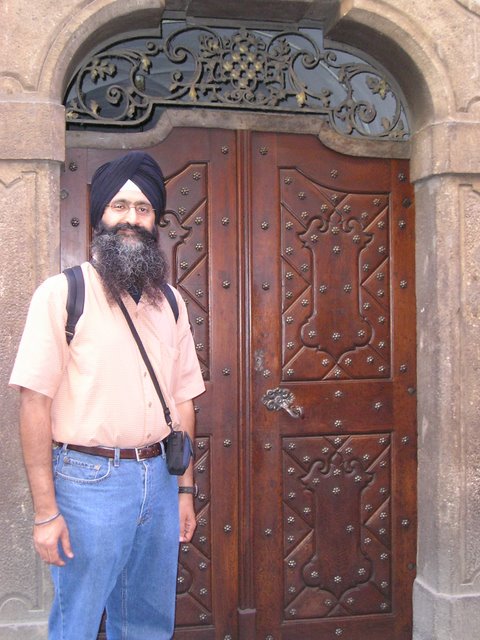 Heavy wooden door with funny looking Singh!!?? :-)
 C'mon, don't tell me you don't look at this door and say "Hmm...cool!"
 Remember my post of the European infatuation with lion heads with a ring through their mouths!? Heavy wooden door... Heavy wooden door with funny looking Singh!!?? :-) C'mon, don't tell me you don't look at this door and say "Hmm...cool!"
 . I just find the handiwork and the elaboration quite fascinating. It also reminds me of the gurbani tuk - "guru duare hoe sojhi paisi, et duare hoe hacha hoisi..."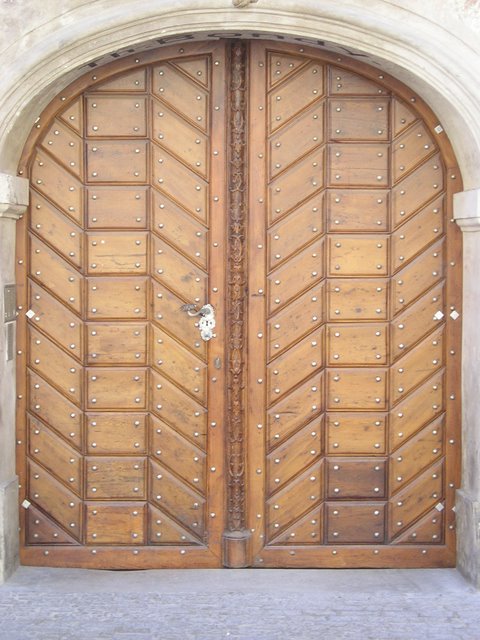



 A family friend of ours gets tapped for one of 35 Young Innovators of the Year by MIT's Technology Review magazine which is a popular cutting edge technology power magazine! Great to see him make so much progress in such little time, and another sabat surat in the technology field.
As a result of this brave spirit, there grew up among the Sikhs a peculiar slang, which was called the Vocabulary of Heroes. In it the things connected with difficulties of life were expressed in terms of such cheerfulness and bravado, as if for the Sikhs pain and suffereing had lost all meaning. Death was familiarly called an expedition of the Khalsa into the next world. A man with an empty stomach would call himself mad with prosperity. Grams were almonds, and onions were silver pieces, while rupees were nothing but empty crusts. A blind man was called a wide-awake hero, and a half-blind man an argus-eyed lion. A deaf man was said to be a man in the upper storey. A baptised Sikh was called a brother of the Golden Cup, which, by the way, was only an iron vessel. To be fined by the community for some fault was called getting one's salary. The big stick was called a lawyer or the store of wisdom; and the speak was to roar.Sirdar Kapur Singh has some examples of this vocabulary of heroes in his writings too. But by and far the most extensive dictionary of Khālsā bolī that I have come across is available in the Mahān Kosh by Bhāī Kahn Singh of Nābhā. I just went through a few of them. Full interpretation and what is the context of the words used has not been done (yet!). Hopefully some of you will research some of the words...send me your thoughts!
Akaldān – sotā, stick – lit: that which graces wisdom or common sense
Arang barang – to lie down, to go to sleep
Samundar – milk
Savāiā – little bit – lit: “quarter more”!
Shīsh mahal – roof with a hole in it – lit: house of shining glass
Subedār – Sikh who is brooming/cleaning – lit: a military rank
Sūrmā – blind man - lit: wide awake hero, brave one
Sodhnā – cleansing a wrong doer, freeing land
Harā karnā – to finish, empty – lit: to make green, to blossom
Kājā – hungry
Kājī – chicken - lit: qazi - muslim mosque official
Kābulī kutā – ahmad shah durrani – lit: the dog of
Anna – extremist hindu – lit: blind person
Kanna – extremist muslim – lit: one eyed person
Kesar – haldi/tumeric – lit: saffron the spice (haldi is cheap spice, saffron is expensive..get it?)
Kotvāl – chākū – knife - lit: jail official
Gopāl ladū – eggs - lit: ladoos of Gopal
Gangā jal – alcoholic drinks – lit: water from the
Carhāī – to die – lit: an expedition - charhāī karnā is to wage a battle
Chāl mārnī – to fall - lit:to jump
Dharamraj dī dhī – sleepiness - lit: the daughter of the messenger of death
Dharamrāj dī dhī nāl judh karnā – to sleep – lit: to battle with the daughter of the messenger of death
Thānedār – donkey - lit: jail keeper
Deg masat – to run out of langar - lit: the kettle is tipsy - masat is from mastī
Langar mastānā - to run out of langar, langar not being ready – lit: langar is tipsy
Panjakha – one-eyed – lit: one with five eyes
Basant kaur – makki – corn
Badām – dry grams/chick peas – lit: almonds
Bhūtnī – rail, train – lit: female ghost, witch - train was result of British. Nihangs hated the British!!
Mithāī – sweet potato – lit: Indian sweets
Ransinghā vajāunā – to fart – lit: to play the ransingha, a panjabi wind instrument - I am not joking!!
Lakhnetrā – one eyed - lit: one with hundred thousand eyes
Lakhbahan – one armed - lit: one with hundred thousand arm
many more...consult the MahanKosh!!
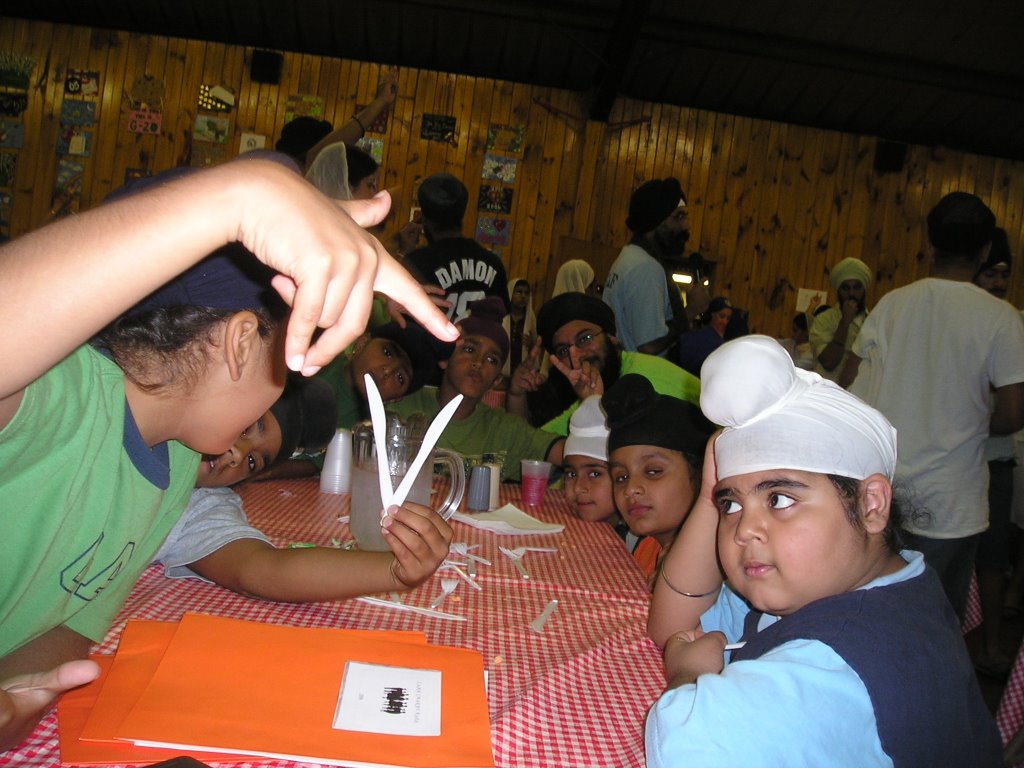
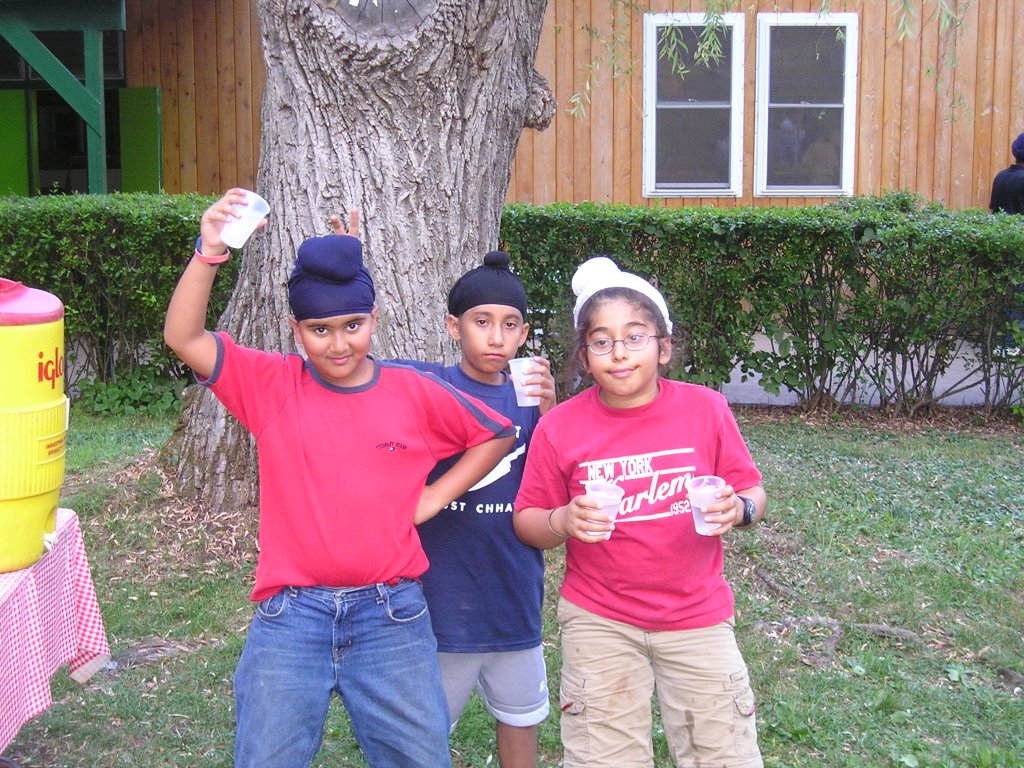
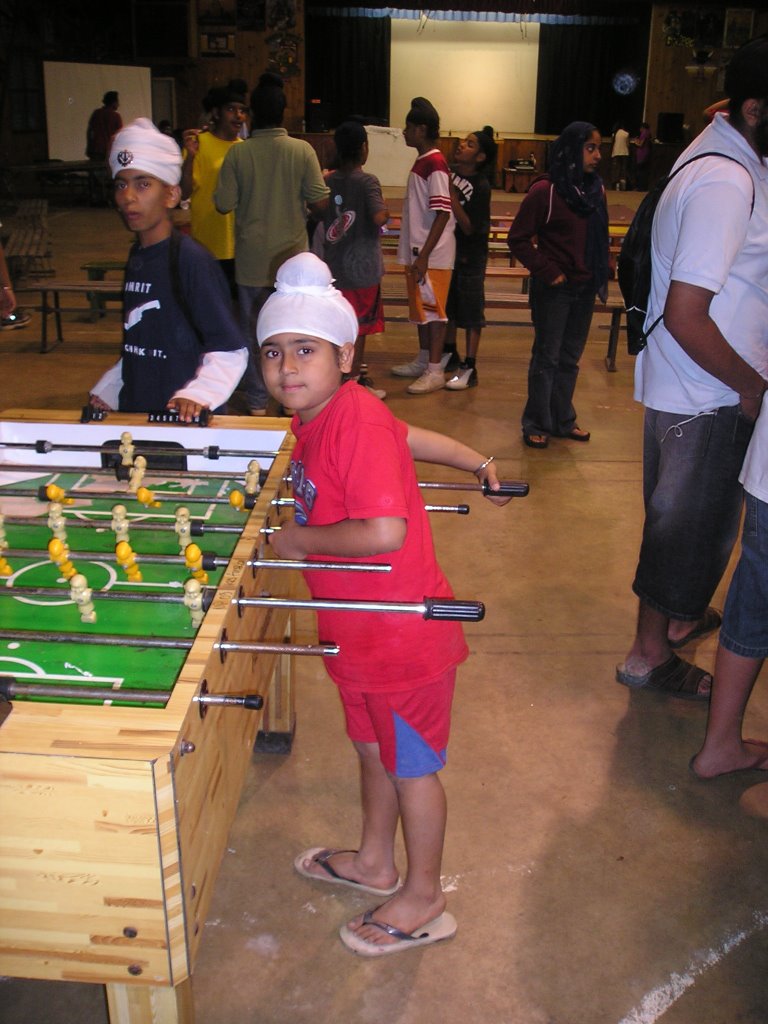 Kīrtan, Gurū Rāmdās lulaby and Sohilā. It ran late so a couple of my kids fell asleep...woke them up for milk and cookies then it was..."Uncle, can we have a pillow fight tonight!!??"
Rakhri - A Symbol of Oppression Against Women
by Harpreet Singh (Sat Aug 04, 2001 www.Sikhe.com)
Since times immemorial, minorities all over the world have sought comfort through conformism. They have often adopted practices that are antithetical to their own beliefs. We need not go very far for examples. Guru Nanak, for instance, in the Asa Kee Vaar shows the conformism and resulting hypocrisy of Brahmins as they attempt to please their masters and maintain their caste hierarchy.
…They wear their loin cloths, apply ritual frontal marks to their foreheads, and carry their rosaries, but they eat food with the Muslims. O Siblings of Destiny, you perform devotional worship indoors, but read the Islamic sacred texts, and adopt the Muslim way of life. Renounce your hypocrisy. Embrace the true Lord, and attain salvation.
The man-eaters say their prayers. Those who wield the knife wear the sacred thread around their necks . . . Wearing blue robes, they seek the approval of the Muslim rulers. Accepting bread from the Muslim rulers, they still worship the [Hindu] Puraanas. They eat the meat of the goats, killed after the Muslim prayers are read over them, but they do not allow anyone else to enter their kitchen areas. They draw lines around them, plastering the ground with cow-dung. The false come and sit within them. They cry out, "Do not touch our food, or it will be polluted!" But with their polluted bodies, they commit evil deeds. With filthy minds, they try to cleanse their mouths. Says Nanak, meditate on the True Lord. If you are pure, you will obtain the True Lord.
Raag Asa, M. 1, SGGS, p. 471-72
Clearly, conformism is unacceptable to Guru Nanak, who created a sovereign and a defiant race of human beings through his revolution. Unfortunately, some Sikhs today under the influence of Brahminism have become conformists. As a compelling example, let's examine the festival of Rakhri that is celebrated today by many Sikhs who are ignorant of its significance. First, some background grounded in its hoary mythology is in order.
One of the two festivals celebrated during the bright fortnight during the Hindu month of Shravan is Raksha Bandhan, better known as Rakhri among Punjabi Hindus. It is a tradition with ancient roots. Bhavishya Purana refers to a fierce battle that raged between the gods and the demons. From news received from the battlefield it appeared that the demons were getting the upper hand and would gain victory.
Indra, the supreme Hindu deity, summoned his teacher Vrihaspati to his court for advice. Indra's wife Indrani was also present. Before the teacher could speak, Indrani rose and said, "I know how to assure the victory of the gods. I give you my word that we will win." The next day was full moon night of the month Shravan. Indrani had a charm prepared as prescribed by the sacred texts and tied it on the wrist of her husband. And no sooner did Indra appear on the battlefield with the charm on his hand the demons scattered and fled. The demons bit the dust and the gods were victorious.
It would appear that the Raksha Bandhan of today is derived from this belief. It is held that if a chord made according to the prescriptions of the holy texts is tied round the wrist of a person on the full moon day of Shravan it will ensure him good health, success and happiness for the year that follows.
Rakhri has become a sacred festival for Hindus. Sisters tie amulets to brothers. Brahmin Priests tie them to the men of their congregations. Also on this day, it is noteworthy that the Brahmins change their sacred thread, janeoo, which Guru Nanak rejected at a young age because it symbolizes apartheid though its stratification of society. In
Today Rakhri (literally meaning protection) has become popularized as an annual event in Hindu religion where sisters tie amulets to their brothers and seek the male's protection in exchange. The woman conducting aarti before her brother, a ritual Guru Nanak repudiates in the Kirtan Sohila, sometimes precedes the thread-tying ceremony. This is to the accompaniment of her enunciation or chanting of the following mantra in Sanskrit. Yena baddho balee raajaa daanavendro mahaabalah. Tena twaam anubadhnaami rakshey maa chala maa chala. "I am tying on your hand this Raksha, with which the most powerful and generous King Bali himself was bound; O Raksha, don't go away; don't go away."
From a Sikh perspective, Rakhri is undoubtedly another expression of a patriarchal culture, however well intentioned. It is, after all, the brother who extends his protection to his sister, and the woman who agrees to place herself under the protection of her brother. She is devoid of power and must turn to a male for protection. While this is true in Hinduism, where the law giver Manu gives her a place next to animals, it is not the case in Sikhism. Guru Nanak, in his Asa Kee Var, raised the status of woman, making her equal to man long before
How do we reconcile the celebration of a festival so antithetical to Sikhism by Sikhs ? Five hundred years of work by the Sikh Gurus to give women their basic human rights is undercut through such demeaning rituals imbued in Brahminism. Does not the tenth Nanak declare, "When the Khalsa adopts Brahminical ways, it shall lose my trust", jab eh gahe bipran kee reet, mai na karoo in kee parteet?
Guru Nanak demands complete sovereignty through actions. There is no room for conformism and compromises. Sikh women worldwide should resolve to boycott festivals such as Rakhri that dilute the egalitarian message of Sikhism. What could be a better tribute that can be offered to our Ten Masters who fought to give women equal rights when the rest of the world turned a blind eye to oppression against them ?
Harpreet Singh is an information technology professional and a committed, active Sikh. He is the founder of the successful Sikh Heresy Regulation Board that spearheads active campaigns to prevent lapses in the practice of the Sikh faith.
 I already started getting tired...but had to take some shots
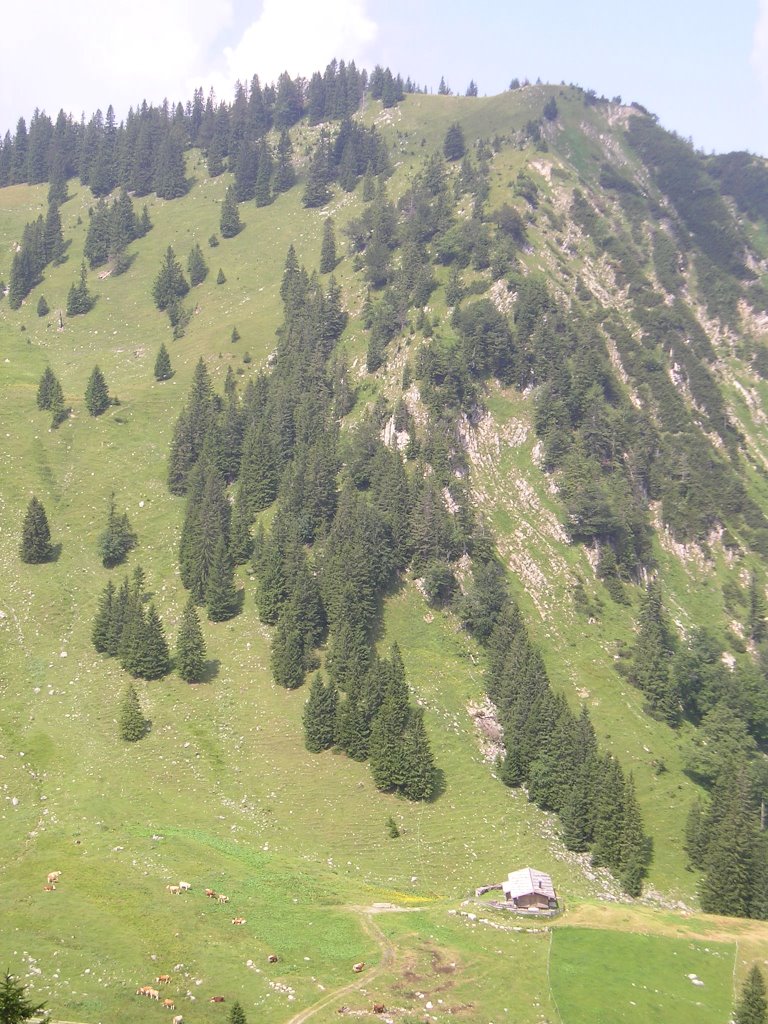 Pretty much at the top now, pretty cool view of the town below...
 Breckerspitze is actually surrounded by three lakes. Don't ask me the names of the lakes...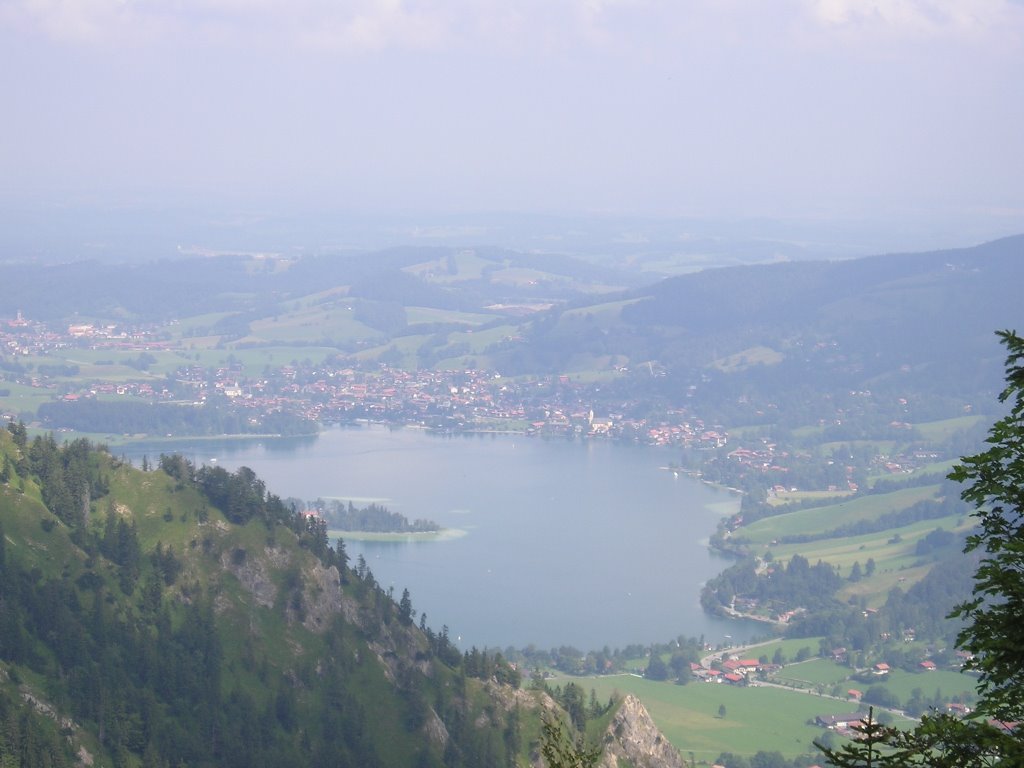



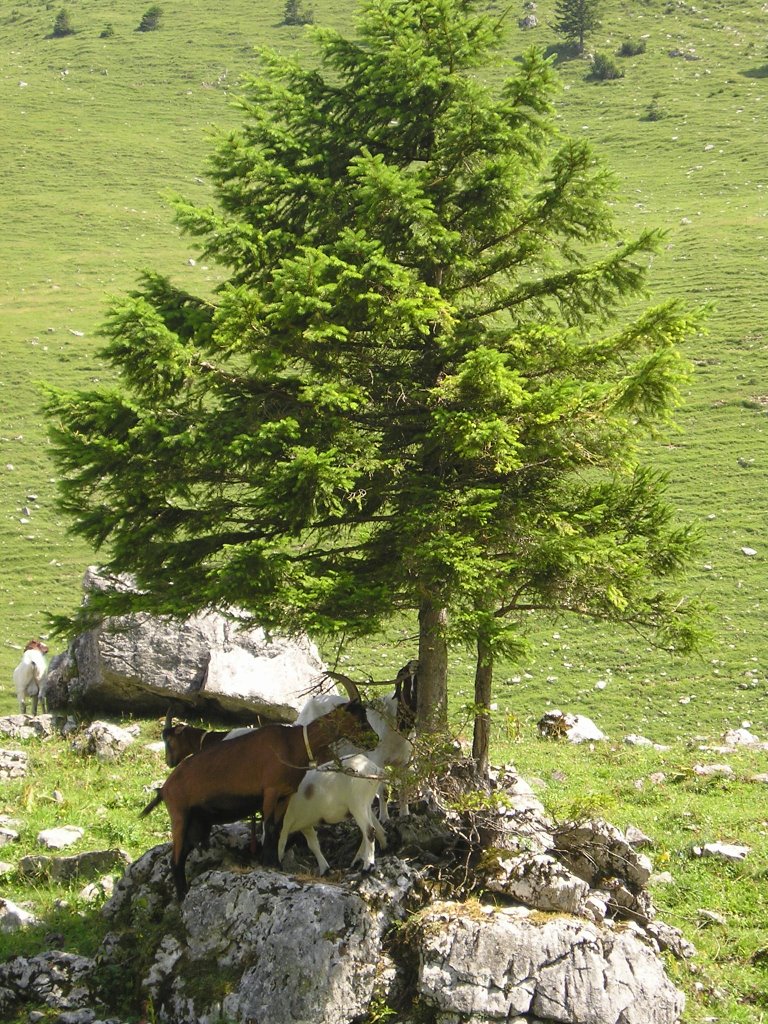
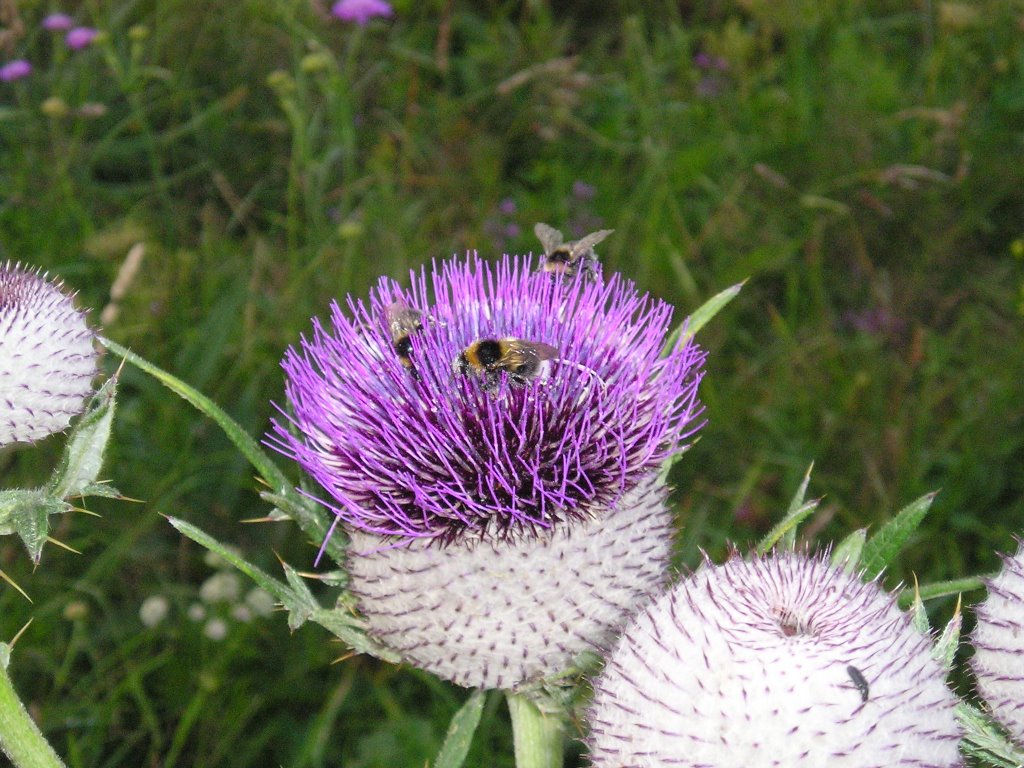 Back near the Alm the goats fighting for the shade...
 It was tiring but great. Gotta do one more hike before I leave Germany at the end of October.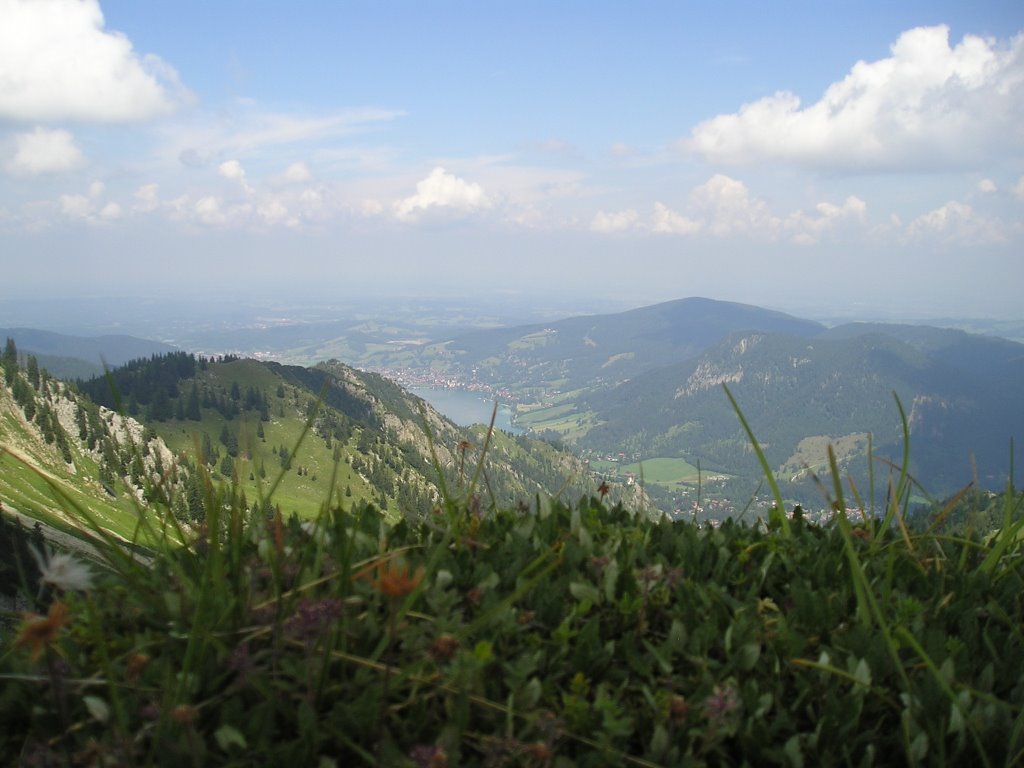
 Nampreet Singh and jatha started off with "ek pita, ekas ke ham barak, tu mera gurhai...". Well done rendition of a sabad rit as found in Bhai Avtar Singh Bhai Gurcharan Singh's book. Accompanying him were Karanjeet Singh on Rabab and Jaswinder Singh on Jori.
 Then there were some speeches from Sikh, Sudanese as well as local Canadian Human Rights activists. Overall an excellent program that raised awareness about the need for action in all parts of the world against Genocide!
It's not that I only have one fault in me that I can wash away and become pure. My Divine Spouse is awake and I am asleep all throughout the night. In this state of being, there is no way my Divine Spouse will be attracted to me, will love me. My Divine Spouse is awake and I am asleep all throughout the night.-------
I come and lay on the bed, full of desires, wants and unfulfilled dreams. In this state of being, will I be able to please my Divine Spouse or will I not? Dear mother. Sigh! What will become of me? I can't survive without the Spiritual (vision-like) Connection with the Divine Spouse!
I have yet to relish the Love Taste of my Divine Spouse, so my desires remain unfulfilled. My youth has passed by and now my old body aches in frustration. There is still a possibility that I may wake up from this sleep of desires and want, by becoming desireless and in a state of fulfillment.
If the Soul Bride's only decoration and makeup is the discarding of haumai, then the Divine Spouse comes and unites in the Bed of the Heart. Nanak reveals: when the Soul Bride renounces self and submerges in the ocean of Divine Will, then the Divine Spouse is immensely pleased.
Then came the “Crown of Martyrs“, our beloved Gurū Arjan. After establishing the worldwide center for Sikh spiritual inspiration (Harimandir Sahib), compiling the Ādī Granth and inaugurating the bānī in its sanctum sanctorium, participating in protests against unjust taxes, establishing yet another Sikh community center and city (Tarn Tāran), and tending to the needs of his people, Gurū Arjan perfomed the miracle of miracles. According to Prof. Puran Singh he was a “prophet, poet, composer of music, passionate lover of the people, architect, saviour“ and he was also “intensely human“. He performed the miracle of putting mislead rulers in their place and of beating the Brahmin at their game of manipulation and dominance. He made the choice of giving up his worldly life and allowing it to come to an end. As we will see, by his choice what he really did was allow his life giving inspiration to live on forever.
Since the time of Gurū Arjan Sāhib‘s martyrdom, the Sikh Nation and indeed the whole world knows and understands that the tradition of martyrdom is part and parcel of the Sikh psyche. Whenever there is a choice – death or freedom – then the majority of Sikhs in our history have chosen death. And the precedent for that choice was established by our Fifth Master. It was the Guru’s model, the example, and the inspiration that would lead hundreds of thousands of Sikhs to choose “death as their bride” rather than live wretched lives of slavery and domestication.
Gurū Arjan taught the technique of martyrdom to his Sikhs. Historians point out that he met his physical death with great peace, equipoise, resilience, steadfastness, resolve, compassion, perseverance, and oneness with the Ultimate Reality. So much so that when red hot sand was poured down his back he kept on uttering “Glory, Glory” and “Sweet is Thy doing!”. He was so steadfast in his convictions that he reprimanded his best friend Saint Mian Mir for attempting to seek pardon from the authorities.
Many followed in his footsteps. First was our beloved Master the Brave Swordbearer (Teghbahadar) Nānak IX who made the same choice and passed on with similar peace and steadfastness as his grandfather. Along with him Bhāī Matī Dās, Bhāī Satī Dās, Bhāī Dayālā made the choice. Then came the four sāhibzādās, the forty mukate, Bandā Singh Bahādur, hundreds of his comrades including the young Sikh soul who disowned his mother for daring to say he was not a Sikh. A sampling of the countless more may include the likes of Bhāī Mani Singh who insisted to be cut apart joint by joint, Bhāī Tārū Singh the gentle yet victorious lion of the Gurū who parted not with his kes but rather his scalp, Bābā Gurbaksh Singh (Nihang) and his 30 Singh companions who fought until death to protect our sacred Harimandir Sahib, father and son Bhāī Subeg Singh and Bhāī Shāhbāz Singh who were crushed on the wheel, and the numerous Sikh mothers who wore garlands of their children‘s limbs in the jails of Mīr Mannū. Then how can we forget Bībī Balbīr Kaur of the Gurū kā Bāgh Morcā fame along with her temporary gift from Vāhgurū[1]. In our recent history, Bābā Jarnail Singh of village Bhindrān, Bhāī Amrīk Singh, Bhāī Thārā Singh, General Shabeg Singh, our brothers Sukhā and Jindā, Beant Singh, Satwant Singh, Jathedār Gurdev Singh of village Kaonke and the unnamed mothers, wives, daughters and sisters that were butchered in the Tījā Ghalūghārā; the list of names is endless and so is their memory. Every drop of blood, every pinch of ash and every echo of the sound of the Gurū‘s word that came from their mouth has helped shape our tradition of martydom and allow for its sustenance in the ages to come. There can be no question of that.
The significance of the Shahīdī Gurpūrab of Panjve Pātshah is that it marks the opening of the spillways of the dam that blocked the reservoir of Sikh blood which then flowed into our history to make sacred our land, our faith and our culture.
It is distressing to have read the words of certain men and women of so called “academic circles” that are trying to discredit our tradition of shahīdī[2]. Some historians have given weird reasons for Guru Arjan Sāhib‘s martyrdom. They know not that we, the Sikhs, are a haughty lot. The Sikhs don‘t need some orientalist or athiest inspired researchers defining or reinterpreting our traditions. We know who were are. However, we are also a forward thinking, open minded and compassionate lot. Let them study our hearts and the manners of our manifestations of love. We know who we are and we need no logical explanation of our attachement to our Guru. It is just like the case of a child that has this inherent sixth sense for his or her mother‘s touch. It automatically soothes and makes a crying volcano into a giggly babe. When our minds envision Gurū Arjan on the red hot ironplate, and when our ears hear him reveal “ ‘Tis sweet, whatever Thou doest oh Vāhgurū, Nanak only seeks the treasure of Internal Rememberance“[3], then our souls are automatically cooled and our convictions are immediately made steadfast. There is no logic or science behind it. There is only experience and feeling.
And on this day, the anniversary of the martyrdom of the “Crown of Martyrs”, let us experience and feel. Let us beg for even an iota of courage and faith that our ancestors had when faced with the ultimate choice. Let us not forget our tradition of shahīdī and cherish the memories of those made immortal by following it.
I end with poem on “martyrology“, a unique Sikh inspired term I guess. It is written by Harmohanjit Singh from his book of poems: Sugar, Steel and the Maple Leaf.
[1] In Sikh tradition a “child” of Gursikh parents is considered the amānat of Vāhigurū that is temporarily put in the care of the parents. Bibi Balbir Kaur is known to have placed her dead child (shot by a British bullet) on a mound while saying “Vāhgurū apni amānat vāpas leh lai” (Vāhguru, please take back Your belonging which you temporarily put in my care…). She then proceeded to get shot by a bullet and attained martyrdom. Please read “Adarshak Singhnian” by Karam Singh.
[2] Yes, McLeod and his disciples have also worked hard to discredit and confuse our cherished concept of martyrdom by so called “historical analysis”. Please read: Martyrdom in the Sikh Tradition: Playing the ‘Game of Love’, Louis F. Fenech,
[3] ਤੇਰਾ ਕੀਆ ਮੀਠਾ ਲਾਗੈ॥ ਹਰਿ ਨਾਮੁ ਪਦਾਰਥੁ ਨਾਨਕੁ ਮਾਂਗੈ ॥ terā kīā mīthā lāgai. hari namu padārathu nānaku māngai.

"There has been much speculation about what Anandu is, but the Word of the Guru now makes the matter clear. The Anandu is to be ever with God, the gift of His Grace and mark of His love. God, in His Mercy, destroys the impurities and limitations of the human ego and bestows upon him the true knowledge and everlasting existence. The man when freed from the gravitational pull of the world of corruption becomes weightless and purified with Truth, that is, the Word."
- Anandu taught by Sikhism
Everyone assumes they know what anandu is. The fact of the matter is that the realization of anandu comes from the Gurū. Yes, the realization of anandu comes from the Gurū. The Beloved bestows this Grace. The Beloved bestows this Grace that anandu is the state where all doubts and frustrations are vanquished and one sees the world through the lens of Wisdom (giān). Anandu is that state where the internal soul is not pulled by external attachments, and when the soul is soothed only by the sound of Infinite Wisdom (sabad). Yes my friends, that is what anandu is. Trust when Nānak says: the realization of anandu comes from the Gurū.The question now remains: after a blissful divan, kirtan or katha - are we truly in anandu?
Carhdī kalā!
 One man who took it upon himself to begin the counting was the great martyr Sardar Jaswant Singh Khalra. Last year after many many years, a rare video of his speech (delivered at Dixie Gurduara in the mid 1990's) was shown in Gurduaras in Toronto during the November Pogrom Memorial programs which also introduced Sardarni Jaskaran Kaur and Sardar Sukhman Singh of ENSAAF to the Toronto sangat. Now finally Shiromani Khalsa Dal has uploaded it on their website for free download. I urge every single one of you to download it and listen to it very carefully. The subject is clear - Human Rights. The lesson is clear - Stand up for your Rights. The message is clear - Never Forget our Martyrs.
"The history of the Sikh spirit, in which lies the true and only right interpretation of the Guru's Word, is still a sealed book. The secret love of the people for the Guru is buried in their bosoms, and so far it has been transmitted only as a holy passion from generation to generation (1). It is that invisible faith which flourishes in the shade. For the people the person of the Guru is the only fact of the soul. I love Him. I die for Him. Why ask me why? I love. He loves me. That is all. Our history? This much. How he was put in a cradle and and rocked, how he talked as a child and as a boy; what games he played; how he looked when young; how he looked sitting on the ground, or discoursed; what words fell from his lips; what replies he gave to questions; how his glances dispelled doubts; the stories of his inspiring faith, of sowing heroism in others, all little details of his life which our poets like Bhai Santokh Singh (2) and Bhai Vir Singh (3) have gathered for us, all this is our history. We are never tired of listening to its endless repetition, now laughing, now weeping, now longing to see him, to hear about him. This is what we call history, which whenever read, strikes sparks of love in our soul (4). Through a flood of tears of love we see our Gurus. The frail clay mounds and mud walls of our Gurudwaras encase immortal memories (5): perishable materials glow for us with imperishable visitors. We see them in our soul...."

